Rafael Tries to Buy His Way Home
A fugitive tailor offers his sister stolen gold, but an old accomplice follows him home.
- Western
 By Storyleo Editorial
- 7 min read


Listen to this story · narrated, 10 minutes
The Weight of an Empty Cage
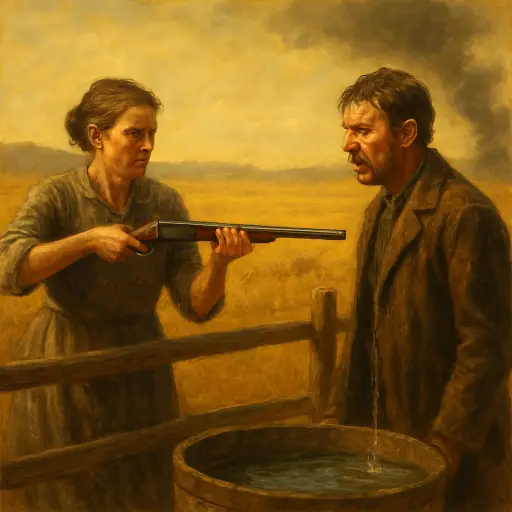
I was halfway through measuring my own coffin when my sister put a shotgun against my back.
“You’ve gained an inch, Rafael,” she said.
I stood outside her shop in Laredo with a carpenter’s rule against my shoulder. The undertaker next door had left two coffins beneath his awning, and after fourteen years away, I had wanted a moment before knocking.
“Good cloth will hide it.”
“So will six feet of dirt. Turn around.”
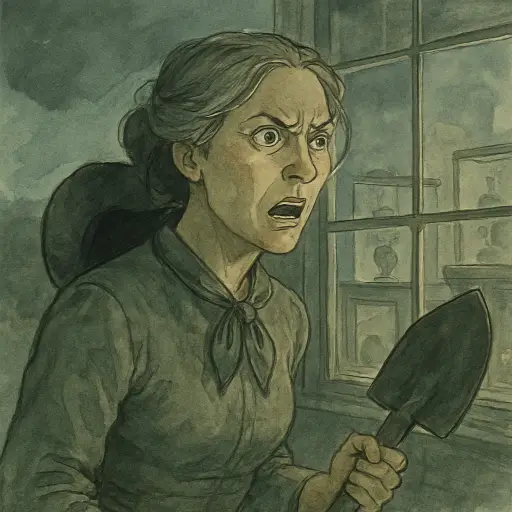
Mercedes had our mother’s broad cheekbones and none of her patience. Gray threaded her hair above the ears. Behind her, a pressing iron smoked on a charcoal stove, filling the shop with the smell of hot wool.
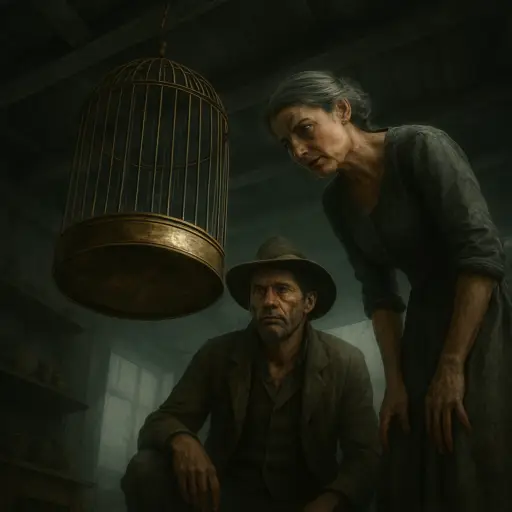
Her eyes dropped to the birdcage in my hand.
“Where’s the bird?”
“Never had one.”
“Fourteen years, and that’s what you bring me?”
Beyond the buildings, wagon wheels rattled toward the Rio Grande. A vendor called out tamales in a voice cracked by dust. It was September of 1885, and the town had acquired brick warehouses, telegraph wires, and a railroad. My sister still worked beneath the same patched canvas awning.
“I came to buy back my half of the shop.”
She lowered the shotgun just enough to look dangerous another way.
“You never owned half. You owned a stool and three needles. You took the needles.”
A boy inside stopped sweeping.
“Go fetch water, Ignacio,” she told him.
He slipped past us carrying a bucket. She waited until he was gone.
“Does somebody want to hang you?”
“Not in Texas.”
“That wasn’t my question.”
I set down the cage. Its painted feet struck the boards with a solid, expensive sound.
Mercedes looked at it again.
Then she stepped aside, though she did not put away the gun.
What the Paint Concealed
Inside, my old stool stood beneath the cutting table. One leg had been repaired with a piece of mesquite. I touched the worn seat before Mercedes slapped my hand away.
“Wash first. You smell like a saddle blanket.”
I washed in her basin while she closed the door.
“Mother?” I asked.
“Three winters ago.”
The water ran brown between my fingers.
“Did she get the money?”
“Some. She bought coal. Then she heard about a payroll wagon outside Las Cruces and made me burn the next envelope.”
I dried my hands slowly.
“I never shot anybody.”
“Did the men carrying the money know that?”
There was a black dress on her table, pinned for alteration. I recognized the customer’s shape in the shoulders: old Señora Salcedo, who used to bring us oranges at Christmas. Somehow that nearly undid me.
I took my knife to the cage’s bottom rim.
“Not on my table.”
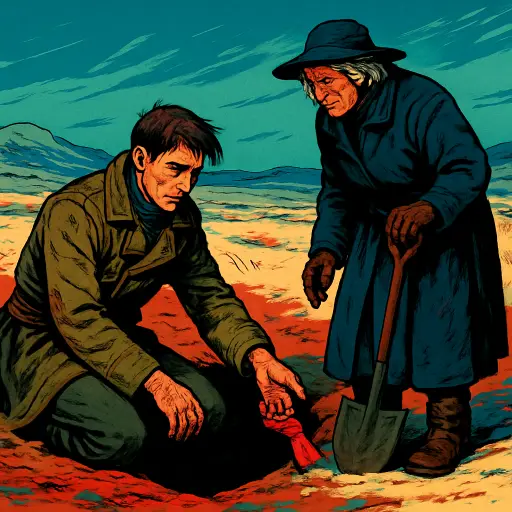
I moved to the floor and scraped away a curl of brown paint. Yellow metal shone beneath it.
Mercedes crouched.
“Gold?”
“Over iron. The base is hollow. More inside.”
She sat back on her heels.
“The others buried their shares,” I said. “I paid a metalworker in Chihuahua. Customs men searched my saddle, my boots, even my flour. Nobody wanted a filthy birdcage.”
“How much?”
“Enough for a larger shop. Two sewing machines. A house where you don’t sleep behind the counter.”
She stood so abruptly that her skirt brushed my face.
“You think I’ve been waiting here to spend it?”
Outside, a horse stopped. Spurs struck the boardwalk.
A man called through the door.
“Rafael. I recognized that cage.”
I closed my eyes.
Not here.
Mercedes lifted the shotgun again.
A Customer for a Black Coat
Wade Haskett entered smiling, with his hands spread clear of his revolver. He had ridden with us in New Mexico and once held a wounded driver beneath a trough until the bubbles stopped.
“Your sister?” he asked. “Family resemblance.”
Mercedes kept the barrels level with his waist.
“Your business?”
“Rafael owes me money.”
“Get in line.”
His smile disappeared. He opened his coat, showing a second revolver tucked inside his waistband.
“We can make noise, señora. I’d rather not.”
I stepped between them.
“What do you want?”
“The cage. A horse. You to ride south with me.”
“Why me?”
“Because you know how to open it without spilling gold across the street. Because I don’t want you telling anybody which way I went.”
He glanced around the shop, then at Mercedes.
“Perhaps your sister comes instead.”
My hand closed around the measuring tape at my neck.
“You’ll be noticed in that coat,” I said. “Every peace officer between here and Cotulla has your description.”
His right cuff was stiff with old blood. He saw me looking.
“Got another?”
Mercedes’s eyes moved toward a black broadcloth coat hanging behind the counter.
“That one,” I said. “Railroad clerk ordered it. Near your size.”
Haskett backed against the door.
“Fetch it.”
I took the coat down. Good wool, close-woven, with a silk lining. Mercedes had left the sleeves open for their final fitting.
“Needs hemming,” I said.
“Then earn your keep.”
He made Mercedes put the shotgun on the floor and kicked it behind him. His second revolver went onto the counter within reach.
Then he stripped off his stained coat, keeping his first gun pointed at my belly.
I held up the new one.
“Left arm first.”
The Strength of a Seam
A tailor learns where a man will yield. Shoulders betray a stoop; waistbands confess what mouths deny.
Haskett wanted to watch Mercedes, so he turned sideways while I settled the coat across his back. I folded the unfinished right cuff inward and slipped my needle through both layers, catching the lining against his shirtsleeve.
“Stand easy,” I said.
“Work faster.”
I drew the waxed linen tight. Four quick stitches. Then four more.
Mercedes watched my hands. She had taught me that stitch when I was nine.
“You’ll want the cage wrapped,” she said. “Paint’s coming off.”
Haskett glanced toward it.
“Get some cloth.”
She crossed to the shelves. I knelt at his right side and turned up the cuff again, enclosing another inch of sleeve.
“Your brother always this slow?” Haskett asked.
“Only when something matters.”
He looked down.
I drove the needle through his cuff and into the meat below his thumb.
His shot smashed the pressing stove.
I seized the coat skirt and hauled it up over his shoulder. He tried to wrench his gun hand free, but wool and shirt were stitched together; his arm caught halfway out, elbow folded against his ribs.
He struck my cheek with his left fist. White light burst across my sight.
“Mercedes!”
She swung the heavy pressing iron into his bare left wrist.
The second blow caught him behind the ear.
He collapsed against me, dragging us both through spilled charcoal. I held his gun wrist until Mercedes pried the revolver from his fingers.
For several breaths, there was only Haskett’s groaning and the hiss of a burning sleeve.
Mercedes stamped it out.
“You scorched the clerk’s coat,” she said.
I lay on the floor with blood running into my collar.
“I’ll replace it.”
She pointed Haskett’s revolver at him.
“You will.”
A Place by the Window
The city marshal arrived with Ignacio and three men who smelled of beer and stable dust.
Haskett went out bound with harness straps. The marshal stayed behind, looking at the cage, the ruined stove, and me.
“There’s a reward for him,” he said.
Mercedes began picking broken stove iron out of her wool basket.
“Put it toward the damage.”
I scraped another strip of paint from the cage.
“You’ll want this, too.”
She stopped working.
The marshal bent to examine the gold. Then he looked closely at my face.
“What’s your name, mister?”
I could still have given him another. There was a loose board behind the shop, a good horse at the livery, and a river that had carried worse men than me.
“Rafael Valdés,” I said. “I helped rob the Western Payroll Company wagon outside Las Cruces in June of ’78.”
Mercedes set the basket down.
“You’ll need a statement,” I continued. “And somebody who can write better than I do.”
I returned to Laredo in the spring of 1891 wearing a prison-made suit with sleeves too short for me.
Restitution and testimony had shortened the sentence, not made it gentle. My right hand ached in cold weather. I still woke when keys struck iron.
The shop had a new window and two treadle machines. Inside, Mercedes was arguing with a customer about how tightly a waistcoat could reasonably fit.
She saw me through the glass.
“Wash,” she said when I entered. “Then try this on.”
A coat waited across her arm. Brown wool. My measure.
Beside the window stood the birdcage, stripped to its thin iron frame.
“They let you keep it?”
“After they took everything worth taking.”
It held spools now, red and blue and cream, hung from the remaining bars.
My old stool stood beside it.
I put on the coat. Mercedes smoothed the shoulders, tugged one cuff, and stepped back.
“Well?” I asked.
“Sit down, Rafael. There’s work.”