He Must Choose Between Her and the Railroad
A recovered telegraph record forces former lovers to confront the testimony that destroyed her father’s name.
- Western
 By Storyleo Editorial
- 7 min read


Listen to this story · narrated, 10 minutes
The Message Under Glass
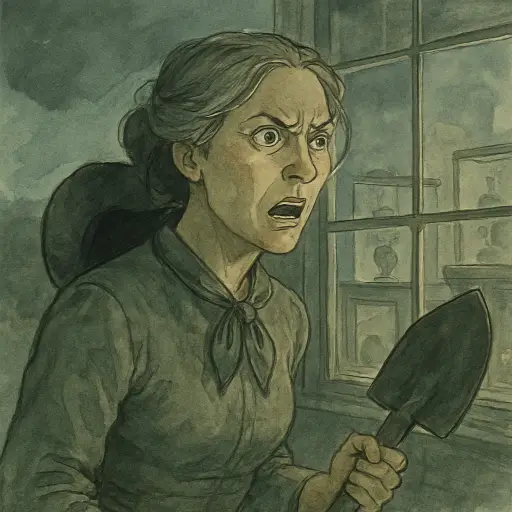
Gideon Price caught his former fiancée breaking into the museum with a coal shovel.
“You’ll split the frame,” he said.
Cora Whitcomb turned beneath the window, her hat hanging down her back by its ribbons. Eight years had silvered one strand above her temple. She still held a tool as if it had personally disappointed her.
“Then unlock the door.”
Behind Gideon, the midnight freight shook the glass cases. Salina had acquired three hotels, two brick banks, and this private museum since the railroad brought its appetite west. The owner called it civilization. Gideon mostly guarded arrowheads, stuffed birds, and machinery nobody wanted to repair.
“What are you after?”
“The register from Kestrel Junction.”
His hand tightened around his lantern.
She noticed. Of course she noticed.
“You knew it was here.”
Inside, she went straight past the mineral specimens to the railroad cabinet. Beneath its glass lay a brass telegraph register and a narrow ribbon of paper wound inside a wooden carrying box.
The register had recorded incoming Morse signals in ink. Dots and dashes, preserved long after the wire fell silent.
“The company said everything burned,” Cora said.
“This came from the superintendent’s estate last month.”
“And you didn’t send for me?”
Gideon looked at the boot he could no longer fill properly. Four toes gone beneath a locomotive; fifteen dollars a month for watching dead things.
“I was deciding what to say.”
She set the shovel down with extraordinary care.
“My father died with that wreck on his name. You’ve had a month.”
He took the cabinet key from his pocket.
“The museum owns it. I’ll need permission to take it out.”
“Then wake your employer.”
Outside, freight cars struck their couplings, one hard report after another. Gideon lifted his coat from its peg.
“He’ll be less disagreeable before breakfast.”
A Ticket Farther West
Cora had rehearsed meeting Gideon many times. In none of those meetings had he carried her valise.
At dawn he stood beside her on the platform, the wooden box tucked beneath his arm. His employer had granted him ten days, unpaid, and demanded a receipt for the exhibit.
“You needn’t come,” she said.
“He entrusted it to me.”
“How convenient.”
Gideon accepted that without looking away.
She had wanted him to argue. Anger was easier when he helped.
They boarded a westbound train smelling of hot wool, oranges, and stove soot. Beyond the window, carpenters were raising another hotel beside a street that still held wagon ruts.
Cora spread a lawyer’s letter across her knees. Her father’s fellow operator, Walter Brice, had been found in Denver, sick and living above a bakery. He was the only man left who might identify the junction’s recorded traffic.
The company maintained that her father had sent two trains onto the same track. Cora maintained that someone had changed his dispatch.
For eight years, neither position had fed his widow.
“Can you still read Morse?” Gideon asked.
“I earn my living reading it.”
“I meant the marks.”
She opened the box. The paper smelled faintly of cedar and machine oil. Carefully, she unwound six inches.
He watched her fingertip stop.
“What?”
“The instruction to hold Number Nine. It reached the junction at six fourteen.”
The wreck had happened at six twenty-seven.
Gideon stared through the window.
“Your father told me he never received it.”
“And you testified that he must have.”
“I testified the instrument was working.”
“The company made good use of the distinction.”
Her voice had risen. Across the aisle, a salesman lowered his newspaper.
Gideon leaned nearer.
“Yes,” he said. “They did.”
She rewound the ribbon slowly. For the first time since boarding, she wished the journey were longer.
The Country Between
By afternoon the settled farms thinned, leaving grass bent flat beneath a steady wind. Cora slept against the window with one glove clenched in her hand.
Gideon kept the box on his knees.
He remembered her father bringing supper to the junction: fried potatoes wrapped in a towel, enough for everyone. After the wreck, company officials had asked Gideon whether the register worked. He had said yes. They had not asked who removed its paper.
He had been twenty-seven, newly crippled, with a promised position in the company store.
Not an excuse, he thought, and shifted his aching foot.
At a water stop Cora woke while he was attempting to stand.
“Give me your elbow.”
“It’ll ease.”
“I didn’t ask for a prediction.”
She helped him onto the platform. The wind pulled at her skirts. Somewhere beyond the station, a blacksmith’s hammer rang against iron.
“I wrote you,” he said.
“I received it.”
His throat closed. “You never answered.”
“You offered to marry me if I stopped pursuing the inquiry.”
“I thought we could leave it behind.”
She released his arm.
“You could. I would have taken it into every room of our house.”
The conductor called them aboard.
Gideon stayed still a moment, although his foot hurt worse standing.
“I should have gone with you to the hearing.”
“Yes.”
“I was afraid they’d take the store position away.”
“I know.” She looked down the platform. “I was waiting for you to say it.”
He offered her the step first.
Later, when the car grew cold, she accepted his coat across her knees. They ate bread and cheese from the same parcel, passing it between them without speaking.
He did not mistake that for forgiveness. But when she slept again, he moved the box so she could rest her shoulder against his.
The Baker’s Upstairs Room
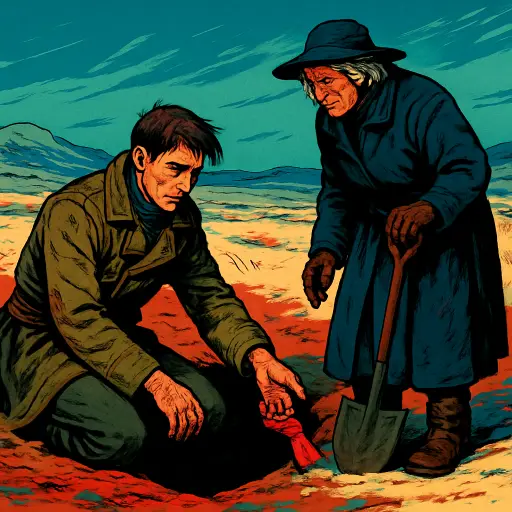
Denver smelled of coal smoke and fresh bread when they found Brice’s lodging. Cora climbed the narrow stairs ahead of Gideon, then waited outside the door until his uneven footsteps caught up.
Brice sat by an open window, a blanket over his thin legs.
“Whitcomb’s girl,” he said. “You have his eyebrows.”
“I’d rather have his good name.”
“I expect you would.”
She put the register box on his table.
He touched the ribbon, then asked Gideon to fetch a magnifying glass from the mantel. For several minutes there was only the rumble of delivery wagons below.
“This proves the message arrived,” Cora said.
“At the instrument,” Brice answered.
She gripped the table edge.
“My father was in that office.”
“Your father was under an overturned baggage cart, helping lift a porter free. I was supposed to relieve him.”
Gideon heard the paper crackle beneath Cora’s fingers.
Brice swallowed. “The superintendent sent me to bring his private carriage round. When I returned, he had torn off the latest length. Said Whitcomb had acknowledged the order by hand. Told me to keep the register running.”
“And afterward?”
“Afterward he offered me a better station.”
Cora stepped back as though something on the table had burned her.
“You let us bury him believing—”
“I know.”
“No. You don’t get to finish that sentence for me.”
Gideon went downstairs and asked the baker where to find an attorney.
By evening Brice had made his statement before witnesses. The attorney arranged to send it to Cora’s lawyer, together with a sworn description of the ribbon. Gideon made his own statement about the company’s questions after the wreck.
As they left, Brice called after Cora.
“Will you come tomorrow?”
She paused on the landing.
“I’ll bring breakfast,” she said. “That is all I can promise.”
What She Took Home
On the eastbound journey, Cora bought two cups of coffee and handed Gideon the one without a chipped rim.
“You’ll have to testify again,” she said.
“I know.”
“The company may speak to your employer.”
He warmed his hands around the cup.
“I know that, too.”
She sat beside him instead of across the aisle.
The plains rolled past in broad tawny folds. Somewhere out there lay the junction, rebuilt after the wreck, its rails carrying passengers who had never heard her father’s name.
“I nearly married a dentist in Wichita,” she said.
Gideon’s cup stopped halfway to his mouth.
“Did you?”
“He was a decent man.”
“What happened?”
“He disliked my working. Said his wife wouldn’t need wages.”
“Ah.”
“That was approximately my answer.”
He laughed, spilling coffee on his cuff. She took his cup while he found a handkerchief.
“Cora,” he said, “may I write to you? Without conditions this time.”
She looked at the wooden box between their feet.
“You may visit on Sundays. Letters give you too long to improve your answers.”
Six months later, the museum changed its railroad display.
The lawsuit was still proceeding. Brice’s testimony had forced a correction in the company’s account, though money traveled more slowly than apologies. Cora’s mother kept the printed correction beside her husband’s photograph.
Gideon had expected the ribbon to go back under glass. Instead, Cora secured permission for visitors to turn a little handle and hear a telegrapher tap out the recovered order.
She demonstrated it on opening afternoon, her wedding ring clicking softly against the key.
When the room emptied, Gideon came to lock the cabinet.
“Was the journey worth it?” he asked.
She caught his coat before he could turn away.
“Ask me when we get home.”
Then she kissed him, with the museum door still open and the afternoon train arriving outside.