Gold Teeth at the Midnight Ferry


The Man Who Paid in Teeth
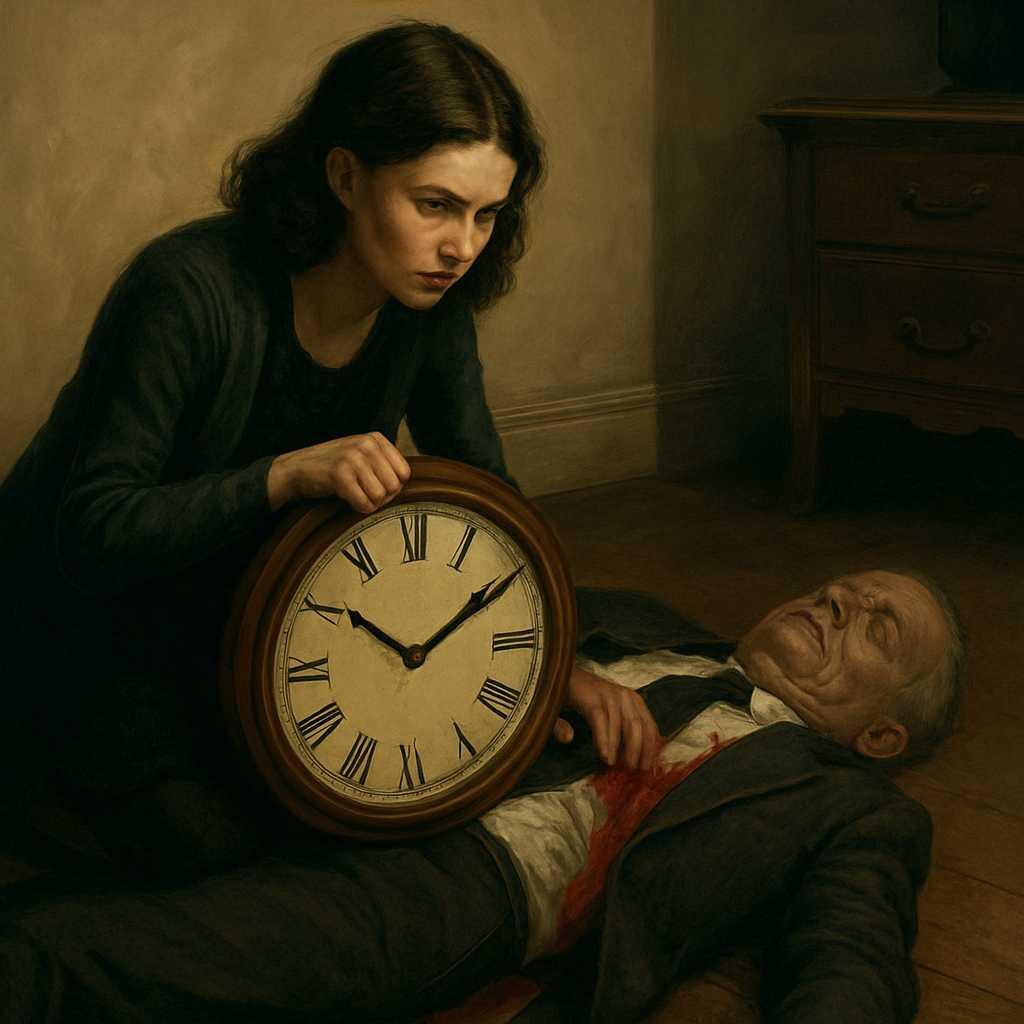
The dead man bought a ticket to the midnight ferry with three gold teeth and a smile that no longer belonged to him.
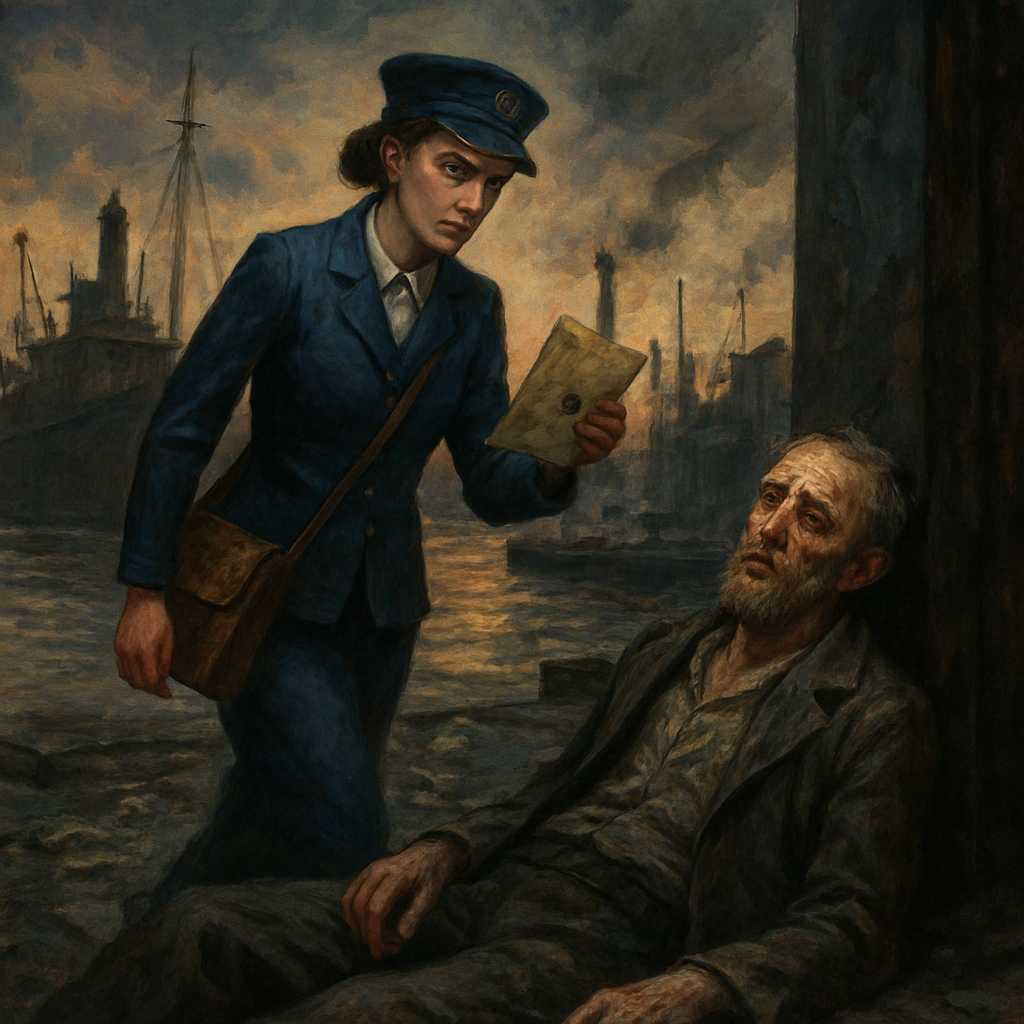
Niva Sorell knew that because she was the one behind the glass at Pier Nine, counting change while fog pressed its wet palms against the booth. The harbor smelled of diesel, salt, and fried onions from old Tansy’s cart. Somewhere below the pier, water slapped the pilings like a bored hand.
The man slid the teeth through the slot.
“No cash?” Niva asked.
He wore a plum-colored coat too fine for Dockmarket and a gray scarf pulled to his chin. His eyes kept jumping past her shoulder to the black ferry rocking at the end of the pier.
“They’re worth more than a ticket,” he said. His voice scraped. “Give me one to Gullcut Island.”
Niva did not touch the teeth. “We take coin, card, or harbor voucher.”
His hand shot through the slot and gripped her wrist. His fingers were cold and sticky.
“Please.”
A red bloom spread under his scarf.
Niva stopped breathing.
Behind him, a police siren moaned far inland, swallowed by fog. The man sagged, forehead hitting the glass with a dull clack. His hat slid off. Beneath it, his hair was stiff with blood.
Niva yanked her wrist free. “Sir?”
He whispered one word. “Marn.”
Then he folded to the wet boards.
Tansy screamed from her cart, dropping tongs into hot oil. A gull flapped up, furious.
Niva burst from the booth and knelt beside him. The scarf loosened. A thin metal tag hung from his neck, stamped with a symbol she knew too well: a hook inside a crown.
The Cresthook Syndicate.
She should have run.
Instead she reached into his coat, because her brother Jory had disappeared three months ago after borrowing money from Cresthook, and because dead men did not beg for ferries unless something behind them was worse than drowning.
Her fingers found a matchbox. Inside was not matches, but a folded strip of waxed paper.
Blue ledger. Marn’s salt shed. Before dawn, or Jory loses both hands.
Niva’s throat closed so hard it hurt.
“Niva!” Tansy cried. “Police are coming.”
Niva slipped the note into her sleeve just as boots thundered along the pier.
Inspector Vaun arrived first, narrow-eyed under a rain-black hat. He looked at the corpse, then at Niva’s blood-smeared cuff.
“Step away,” he said.
She did.
But the gold teeth remained on her counter, grinning under the booth light.
Ten minutes later, Vaun found the matchbox empty.
He turned it over in his gloved hand. “He gave you something.”
Niva rubbed her wrist. “A corpse.”
Vaun leaned close enough that she smelled clove tobacco and wet wool. “Lie better, Miss Sorell.”
She met his gaze through the rain-specked glass. “Investigate better, Inspector.”
His jaw shifted.
At the end of the pier, the ferry bell rang once, deep and hollow.
Niva looked toward Gullcut Island, invisible in fog.
Before dawn.
She still had four hours.
Marn’s Salt Shed
Marn’s salt shed crouched on the eastern wharf, white with crusted brine and old lies.
Niva reached it by the fish gutters, where knives flashed under awnings and eel buckets twitched in the rain. She had changed her ticket-clerk jacket for a dockhand’s oilskin stolen from a peg behind the boiler house. It smelled of sweat, rope tar, and someone else’s bad decisions.
Her friend Otti was waiting beside a stack of lobster traps, short and round-faced, with copper hair shaved close to the scalp.
“You look like trouble wearing a coat,” Otti said.
“I need inside Marn’s shed.”
Otti spat into the harbor. “Everyone needs inside somewhere. Usually it’s a bakery or a warm bed.”
Niva pulled out the waxed note.
Otti read it. Her mouth changed shape, but no sound came.
“Jory?” she asked.
Niva nodded.
Otti tugged a ring of picks from her boot. “Then we steal from criminals. I hate when breakfast gets dramatic.”
The shed door had three locks and a warded chain, expensive enough to make Otti whistle through her teeth. “Marn’s been upgrading.”
“Can you open it?”
“Insult me after I fail.”
While Otti worked, Niva watched the wharf. Lanterns blurred in fog. Men rolled barrels toward the customs house. A woman laughed too loudly near the net racks. Every shape could have been Cresthook.
The final lock clicked.
Inside, the air was sharp with salt and mildew. Stacked sacks rose in pale walls. Rats whispered between them. Otti held up a hooded lamp, and the flame revealed footprints in spilled salt.
Fresh.
Niva followed them to a trapdoor half-hidden beneath canvas.
“No,” Otti said at once. “Trapdoors are how people become rumors.”
Niva lifted the ring.
Below, darkness breathed cold over her face.
“Jory!” she called softly.
A muffled thump answered.
They climbed down iron rungs into a cellar packed with smuggled crates: clock parts, surgical gin, foreign cigarettes, police batons still wrapped in paper.
And at the center, tied to a chair beneath a dripping pipe, sat Jory.
His left eye was purple. His lips were split. He looked thinner than the boy who used to juggle apples outside their mother’s laundry to make Niva laugh.
“Niv?” he croaked.
She ran to him, hands shaking over the knots. “I’m here.”
“You shouldn’t be.”
“That’s your first complaint?”
Otti sawed through rope with a fish knife. “Family reunions are nicer with biscuits.”
Jory grabbed Niva’s sleeve before she could free his ankles. “The ledger isn’t here.”
Niva froze. “Then why send me?”
A floorboard creaked above.
Jory swallowed blood. “Because Marn knows you’d come.”
The cellar door slammed open. Lantern light spilled down the ladder.
A woman’s voice drifted after it, soft as cream poured over poison.
“Niva Sorell,” said Marn. “You have your mother’s stubborn wrists.”
The Blue Ledger
Marn descended the ladder in pearl boots that had never touched honest mud.
She was smaller than Niva expected, with silver-threaded braids coiled tight and a face powdered smooth as a porcelain saint. Two men followed with pistols. One had a scar shaped like a comma under his cheekbone.
“I liked your brother,” Marn said. “Very willing to believe luck was only one more wager away.”
Jory lowered his head.
Niva stepped in front of him. “Let him go.”
“Bring me what was taken.”
“The ledger?”
Marn smiled. “So the dying courier was useful.”
Otti’s fish knife vanished up her sleeve. “If there’s bargaining, I vote we do it somewhere without hostage mold.”
The scarred man lifted his pistol toward Otti.
Niva raised both hands. “I don’t have it.”
Marn watched her so closely Niva felt touched. “No. But you can find it. Inspector Vaun took it from our courier before he reached your booth. The note was bait for him, not you.”
Niva heard rain ticking above, each drop neat as a clock. “Vaun works for you?”
“Vaun works for debt. There’s a difference.”
Jory rasped, “Niv, don’t.”
Marn ignored him. “The ledger lists every magistrate, captain, and judge we pay. Vaun thinks he can sell it to the highest bidder at dawn.”
“Why would I help you bury that?” Niva asked.
Marn nodded to the scarred man.
He pressed the pistol to Jory’s right hand.
Jory made no sound, but his fingers curled against the chair like trapped spiders.
Niva’s stomach folded in on itself.
“Because,” Marn said, “blood is louder than justice.”
They left the shed by a rear door, escorted but unbound. Marn gave Niva until the sixth bell. Otti walked beside her through fog that beaded on their lashes.
“We can run,” Otti whispered.
“With Jory?”
“No.”
Niva kept walking.
Otti cursed softly. “I withdraw the suggestion.”
Vaun’s office stood above the harbor court, lit on the third floor. Niva knew the alley beneath it. She had once kissed a violinist there after a midsummer race, both of them tasting of cheap cider and smoke.
Tonight she climbed the drainpipe with numb fingers while Otti waited below to curse gravity on her behalf.
At the window, Niva saw Vaun inside, coat off, suspenders over a white shirt. He stood before an open safe.
In his hands lay a blue book.
She eased the window latch with a hairpin. It gave.
Vaun did not turn when she slipped in.
“Miss Sorell,” he said. “You climb quietly for a ticket clerk.”
Niva gripped the sill. “You steal loudly for an inspector.”
He laughed once, without warmth.
On his desk sat an envelope bearing the mayor’s seal.
“You’re selling it to City Hall,” she said.
“No.” Vaun placed the ledger down carefully. “I’m giving it to them.”
Niva blinked rain from her eyes.
Vaun opened the book to pages cramped with names and payments. “My daughter died because Cresthook owned the surgeon on night duty. He treated Marn’s knife-man first.”
His fingers pressed the page until they trembled.
“This breaks them,” he said. “At noon, not dawn. Publicly. With witnesses.”
Niva thought of Jory’s hand beneath the pistol.
“Marn will cut my brother apart by six.”
Vaun shut the ledger. “Then we have a different problem.”
Sixth Bell
The plan tasted like rust because it had too many sharp edges.
Vaun would keep the real ledger. Niva would bring Marn a copy, enough to fool her for minutes. Otti would spread word among dockers that police were raiding the salt shed. In confusion, Vaun’s honest constables—he insisted they existed, though Niva eyed him hard—would take Jory.
“And if Marn checks the book?” Niva asked.
Vaun slid a revolver across the desk.
She stared at it.
“That’s not an answer.”
“No,” he said. “It’s what men give women when they’ve run out of good answers.”
She did not take it.
Instead she picked up the fake ledger, its blue cover still smelling of fresh glue.
At the sixth bell, the harbor woke angry.
Whistles shrieked. Dockers shouted. Somewhere, glass shattered. Fog turned pink at its edges as dawn dragged itself over Gullcut Island.
Niva entered Marn’s salt shed alone.
Marn stood by the open trapdoor, dressed in a coat the color of cream, as if attending a wedding. Jory knelt beside her with his hands bound behind his back. Blood had dried along his jaw.
“Book,” Marn said.
Niva tossed it onto a salt sack.
Marn opened it. Her eyes moved quickly.
Otti’s riot began outside exactly then.
“Raid!” someone bellowed. “Harbor police!”
Marn’s men jerked toward the doors. One ran up from the cellar. Another drew a pistol and slipped on spilled salt, boots skidding.
Niva lunged for Jory.
Marn caught her by the hair and yanked her back so hard white sparks burst in her vision.
“You insult me,” Marn hissed.
Niva drove her elbow backward. It hit Marn’s ribs with a flat sound. Marn grunted but did not let go.
Then the shed doors burst open.
Vaun entered with four constables.
“Down!” he shouted.
Gunfire cracked.
Salt sacks burst. White crystals sprayed like sleet. Niva hit the floor, dragging Jory with her. He gasped as she rolled over his bound hands.
“Sorry,” she said.
“Do it later.”
Marn backed toward the trapdoor, pistol in one hand, fake ledger in the other.
“You’ll never use the real one,” she called. “Half this city eats from my palm.”
Vaun aimed at her. “Then we’ll change its diet.”
Marn smiled and dropped backward through the trapdoor.
Niva heard a splash below.
“There’s a tunnel,” Jory said. “Tide pipe. She showed me when she wanted me frightened.”
Niva grabbed a broken crate slat and sliced his ropes. “Are you frightened?”
Jory flexed swollen fingers. “I’m furious.”
They ran.
The tunnel under the shed stank of seaweed and old iron. Water sloshed around Niva’s calves. Ahead, Marn’s pearl boots flashed in lantern light as she hurried toward a round opening where dawn glowed gray.
Niva scooped something from the water: a length of chain slick with algae.
“Marn!”
The woman turned.
Niva swung the chain low. It wrapped around Marn’s ankles. She fell face-first into black water with a sound like meat dropped on stone.
Jory pounced, pinning her wrist.
Marn spat water and blood. “You stupid dock rat.”
Niva crouched, chest heaving. “Ticket clerk.”
The Harbor Reads
By noon, the whole city came to Pier Nine.
Not because of the corpse. Dockmarket had corpses often enough. They came because Otti and the dockers dragged a flour wagon to the pier mouth, and Inspector Vaun stood on it with the blue ledger in both hands.
Magistrates pushed through the crowd, faces shiny with panic. Harbor captains barked for order. A judge tried to leave and was blocked by Tansy, who held a skewer of fried eel like a sword.
“Not before the reading,” she said.
Niva stood beside Jory near the ticket booth. His right hand was bandaged. He kept opening and closing it, as if proving it remained attached.
“I’m sorry,” he said.
She did not look at him. “For gambling? Borrowing? Getting kidnapped? Pick one.”
He winced.
She sighed and nudged his shoulder with hers. “Start with staying alive. Then work up.”
Vaun opened the ledger.
His voice carried over gull cries, steam whistles, and the restless shuffle of hundreds of boots.
Name by name, payment by payment, the city’s clean collars stained in public.
Men shouted denials. Women laughed sharp and bright. Someone threw a rotten lemon that struck a councilman’s hat and exploded yellow.
Then Vaun turned a page and stopped.
The pause spread.
Niva noticed his hands.
They had gone still.
He read the next name softly at first.
“Captain Idra Sorell.”
Niva’s skin tightened.
Jory whispered, “Ma?”
Their mother had died five years ago, honored by a brass plaque outside the harbor rescue station. Captain Sorell, who had pulled children from storm floods. Captain Sorell, who had sung off-key while mending socks.
Vaun continued, voice roughening. “Payments received for ferry route protections. Discontinued after death.”
The crowd murmured.
Niva gripped the booth ledge until a splinter slid under her nail.
Jory shook his head. “No. No, she wouldn’t.”
But Niva remembered winter nights when their mother came home smelling of strange perfume and metal coins, face closed like a locked drawer.
Marn, handcuffed beside two constables, began to laugh.
“Blood is louder than justice,” she said.
Niva crossed the boards to her.
Vaun shifted as if to stop her, but Otti caught his sleeve.
Niva stood close enough to see salt dried in Marn’s eyebrows.
“My mother took your money?” Niva asked.
Marn’s smile sharpened. “Every month.”
“For protection?”
“For silence.”
Niva swallowed. “About what?”
Marn glanced at the ferry, then back. “Ask what she did with the money.”
They found the answer in the rescue station basement that evening.
Behind a false brick, Niva discovered a tin box wrapped in oilcloth. Inside were receipts, names, and ferry vouchers—dozens, then hundreds.
People smuggled out of the city.
Witnesses. Runaways. Debt prisoners. Children sold to crews and stolen back before dawn.
On top lay a note in her mother’s square handwriting.
If you are reading this, little gull, then truth has finally outlived me. I paid wolves so they would look away while I opened the gate.
Jory sat on the floor and covered his face with both hands.
Niva touched the paper. Her breath came out broken, then steadied.
The next morning, she returned to Pier Nine.
A new sign hung in her ticket window, painted by Otti in crooked blue letters.
FERRY TICKETS: COIN, CARD, VOUCHER.
NO TEETH.
NO QUESTIONS BEFORE DAWN.
Inspector Vaun read it and raised an eyebrow.
“That last line may cause paperwork,” he said.
Niva slid open the booth window. The harbor smelled of salt, hot oil, and rain waiting its turn.
“Then investigate better,” she said.
Vaun almost smiled.
Behind him, the first passenger of the morning stepped from the fog, clutching a battered suitcase and a child’s hand.
Niva stamped two tickets to Gullcut Island.
This time, nobody paid in teeth.