Chicharrón and the Sugar Skull Named Ramiro

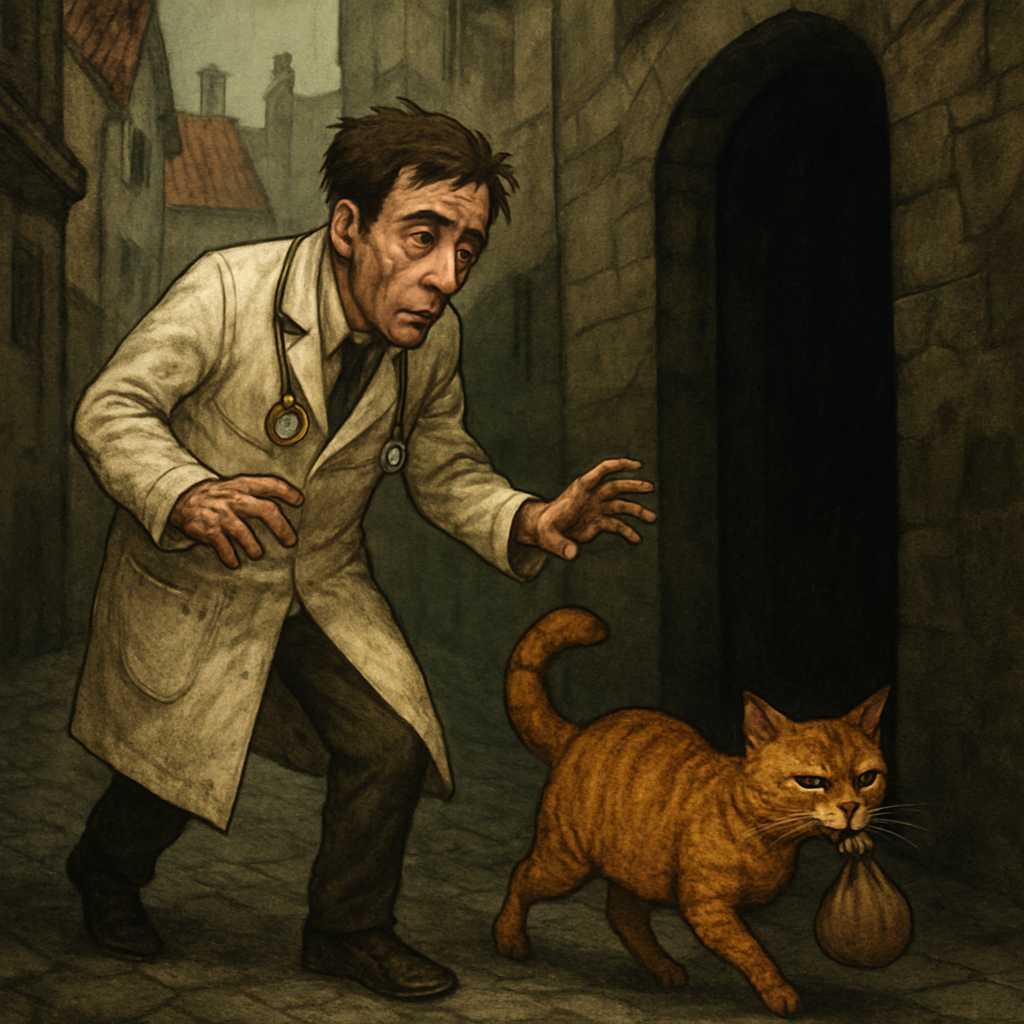
The Cat in the Marigolds
The dead man’s cat walked into the clinic with a sugar skull in its mouth.
Dr. Andrés Salcedo froze with his hand inside a box of donated gauze. Outside, San Jacinto was busy dressing itself for Día de los Muertos—orange cempasúchil petals in the gutters, papel picado snapping between balconies, women laughing as they carried trays of pan de muerto still warm from the ovens.
Inside the little municipal clinic, the air smelled of bleach, dust, and the burnt coffee Andrés had made at dawn.
The cat stepped over the threshold as if it owned the place. It was skinny, black-and-white, with one torn ear and yellow eyes like candle flames. In its jaws, the sugar skull grinned, its frosting name smeared but readable.
RAMIRO
Andrés’ throat tightened.
“No,” he whispered. “Absolutely not.”
The cat dropped the skull on his shoe.
A woman gasped from the doorway. “Doctor?”
Andrés looked up. Doña Lucha stood there with a basket of marigolds on one hip and her grandson’s inhaler prescription in her fist. Her eyes went from the cat to the skull to his face.
“Is that… Don Ramiro’s cat?” she asked.
Andrés had no idea. Don Ramiro García had died three months ago after collapsing in this very clinic, one hour after Andrés sent him home with antacids instead of calling an ambulance.
That mistake had cracked Andrés’ life down the middle. The hospital in Oaxaca let him resign before the formal hearing. San Jacinto let him return because small towns needed doctors, even broken ones, and because his mother had cried in front of the mayor.
He bent for the sugar skull. The cat hissed.
Doña Lucha clutched her basket. “Ay, he protects the message.”
“There’s no message.” Andrés tried to laugh. It came out dry. “It’s a cat stealing candy.”
“On this day?” she said. “With Ramiro’s name?”
The cat licked frosting from its whiskers.
Andrés saw the question blooming in her face, ready to become gossip before noon. He imagined the market stalls, the church steps, the cemetery tonight. The doctor killed him, and now even the dead complain.
So he lied.
“I was expecting him,” Andrés said.
Doña Lucha blinked. “The cat?”
“Yes. Ramiro asked me to feed him.”
The words hung there, absurd and poisonous.
Doña Lucha crossed herself. “Before he died?”
Andrés swallowed. “Before he died.”
The cat sat on his shoe and began chewing the skull again, as if sealing the contract.
By ten o’clock, three people had come to the clinic asking if Don Ramiro’s cat had truly returned.
By noon, it had a name.
“He is called Médico,” said a boy with blue frosting on his chin. “Because he goes to the doctor.”
“His name is Chicharrón,” corrected his sister. “Because he bites.”
The cat bit the boy’s shoelace.
Andrés shut the clinic door and leaned his forehead against the cool metal frame.
“You,” he told the cat, “are a public health problem.”
The cat sneezed.
That evening, Andrés climbed the hill to the cemetery carrying a plastic bag of cans. He had told himself he was only feeding the animal so it would stop appearing at the clinic.
The town glowed below him, each house spilling candlelight and music. At the cemetery gate, families scrubbed graves with buckets and rags. Children chased each other between stone angels. Someone played a trumpet badly and with confidence.
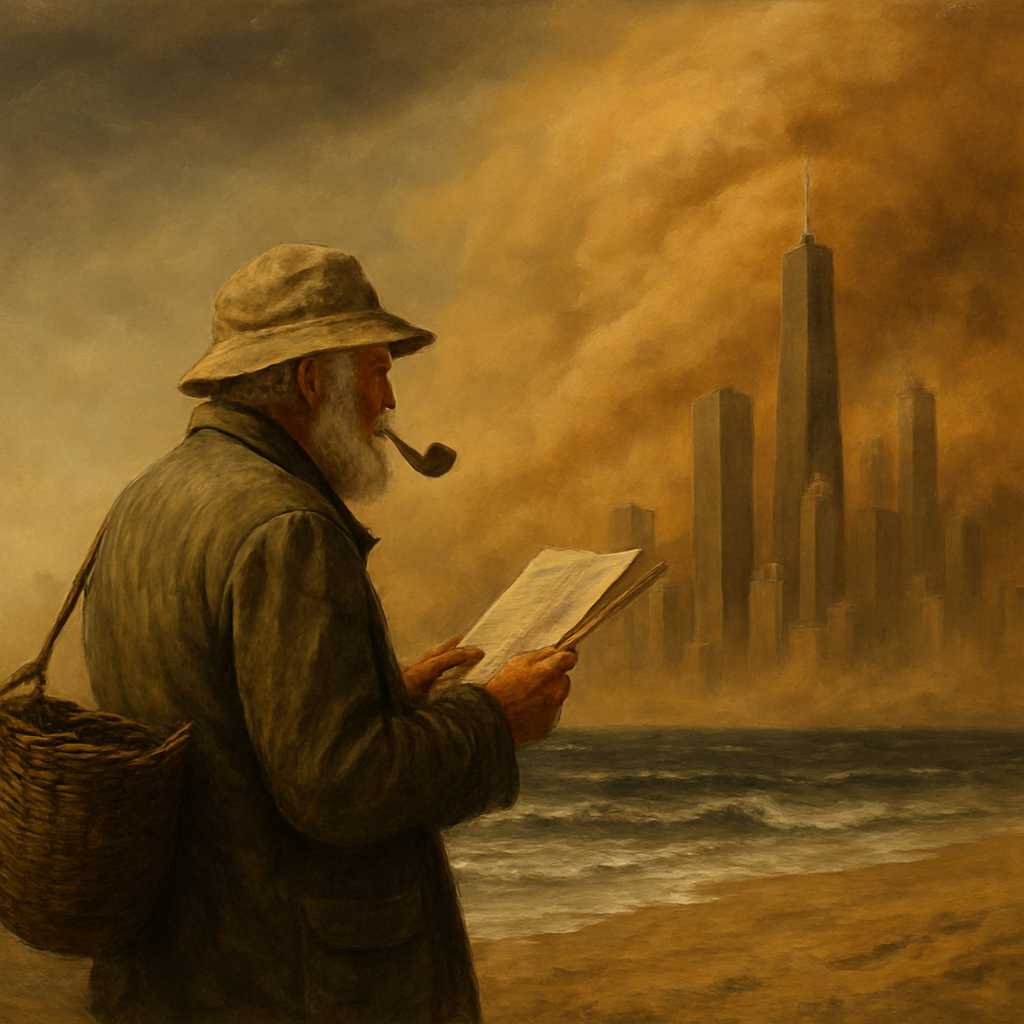
On Don Ramiro’s grave, beside a photograph of the old man wearing his fisherman’s hat, sat the cat.
And under its paw was a folded piece of paper.
Andrés stopped breathing.
“Don’t be dramatic,” he muttered.
He reached for it.
The cat did not move.
“Fine. Sardines first.”
When the tin opened, the cat gave up the paper with great dignity.
It was a receipt from the pharmacy. On the back, in Ramiro’s shaky handwriting, were five words.
Tell the doctor the truth.
Andrés’ fingers went numb around the page.
Behind him, a voice said, “What truth?”
He turned.
Ramiro’s daughter stood between two graves, holding a bundle of white flowers. Mariana García had dark circles under her eyes and a jaw that looked carved from stone. She worked at the bank and had avoided him for three months with the precision of a surgeon.
The cat rubbed against her ankle.
“Mariana,” Andrés said.
“What truth?” she repeated.
He opened his mouth.
The truth was simple and ugly: he had been tired; he had dismissed Ramiro’s chest pressure as reflux; he had been wrong. But the paper in his hand trembled, and the cemetery seemed to listen.
“Your father…” Andrés said, “left something with me.”
Mariana’s eyes sharpened. “What?”
He looked at the cat. It yawned, all teeth.
The lie, hungry from the morning, took another step.
“A message,” he said.
Mariana’s flowers sagged against her arm. “For me?”
“For several people,” Andrés said, hating himself. “I need to understand it first.”
Mariana stared at him so long that the trumpeter found a correct note and lost it again.
“Tomorrow,” she said. “At the ofrenda contest in the plaza. You will tell me then.”
Andrés nodded.
The cat licked sardines from the grave and stepped on the note with one paw, as if adding its signature.
The Doctor Who Heard the Dead
By breakfast, San Jacinto had improved the story.
Andrés discovered this while buying coffee from Don Chuy, whose cart steamed beside the church. Cinnamon curled in the air. A woman in face paint bit into a tamal and whispered to her cousin without lowering her voice.
“They say the doctor understands Ramiro’s cat.”
“Not understands,” said the cousin. “The cat brings him messages from the dead.”
Andrés nearly dropped his coffee.
Don Chuy slid a concha across the counter. “On the house, doctor.”
“Why?”
“My wife.” Don Chuy leaned closer. “If my mother has complaints about the mole, maybe the cat can tell us before tonight.”
“No,” Andrés said. “Absolutely not.”
Chicharrón—because the children’s name had won by force—leapt onto the coffee cart and stole a crumb.
Don Chuy gasped. “He came.”
“He followed the smell.”
“Of my mother?”
“Of bread.”
But the damage was done.
By midmorning, a line formed outside the clinic. Not for blood pressure checks or cough syrup. For messages.
A mechanic held a photograph of his brother. A teenage girl carried a soccer jersey. Doña Lucha brought a mole stain on a napkin and looked solemn.
Andrés stood in the doorway, palms raised. “I do not speak to the dead.”
“Of course not,” said Doña Lucha. “The cat does.”
Chicharrón sat on the examination table, washing one paw.
“He doesn’t,” Andrés said.
The mechanic frowned. “Then why did Ramiro tell you to feed him?”
The first lie turned and bit Andrés.
He could have ended it. He could have said, I lied because I was afraid you’d all see exactly what I am.
Instead, he saw Mariana through the clinic window, crossing the plaza with a box of candles. Her face was closed, but she paused when she saw the line.
Andrés felt the town’s eyes press into him.
“The messages,” he said slowly, “are private. And rare.”
Doña Lucha nodded. “Like good parking.”
“You should all go home.”
No one moved.
A small hand tugged his coat. It belonged to Mateo, eight years old, with knees scratched white and hair sticking up like dry grass.
“My papá died last year,” Mateo said. “Can the cat ask if he saw me score?”
Andrés looked down.
Mateo held a deflated soccer ball against his chest. His lower lip vanished between his teeth.
Chicharrón jumped from the table, crossed the room, and rubbed his cheek against the ball.
The clinic went silent.
Andrés closed his eyes. Damn cat.
“He saw,” Andrés said softly.
Mateo’s grip tightened. “Really?”
“And he says you still kick with your toe. Use the side of your foot.”
Mateo let out a laugh so sudden it cracked in the middle. “He always said that.”
People exhaled all around them.
Andrés had meant to give comfort. Instead, he had built a chapel around his lie.
At the plaza that afternoon, the ofrendas rose like bright islands: candles, fruit, bottles of mezcal, plastic saints, framed faces dusted clean. The air smelled of copal incense and fried dough.
Mariana’s altar for Ramiro was precise and spare. Fishing lures. His cracked radio. A plate of green enchiladas cooling in the sun.
Andrés approached with Chicharrón under one arm. The cat had allowed this only after shredding his sleeve.
“You’re late,” Mariana said.
“The cat had opinions.”
“So does the town.”
She pointed across the plaza.
A sign had been hung beside the bandstand in purple marker.
MESSAGES WITH DR. SALCEDO AND CHICHARRÓN
DONATIONS FOR CLINIC REPAIRS
Andrés stared. “I did not authorize that.”
“The mayor did.” Mariana folded her arms. “He says if you’re going to perform miracles, the roof can stop leaking.”
“I’m not performing miracles.”
“Then what are you performing?”
He looked at her. Her eyes were wet, but she stood rigid, daring him to notice.
“Mariana,” he said, “your father left a note.”
She held out her hand.
He placed it in her palm.
She read it once. Twice. Her mouth flattened.
“Tell the doctor the truth,” she said. “What truth?”
Chicharrón squirmed free and sprang onto Ramiro’s ofrenda. His tail knocked over a candle. Andrés lunged, caught it, and burned two fingers on hot wax.
“Carajo.”
The cat shoved his nose behind the framed photo and pulled out something wrapped in newspaper.
Mariana sucked in a breath. “That wasn’t there.”
Andrés unfolded it.
Inside was a small orange pill bottle with no label.
Mariana reached for it. “What is that?”
Andrés turned it in his hand. The pills were oval, pale blue.
Blood pressure medication. Strong. Not Ramiro’s prescription.
His burned fingers throbbed.
The lie had grown teeth. Now it had found a bone.
The Bottle Behind the Photograph
“Those are not my father’s pills,” Mariana said.
Andrés heard the thin edge under her words. She wasn’t asking. She was hoping he would argue so she could cut him with the answer.
“No,” he said. “I don’t think they are.”
“Then why were they on his altar?”
Chicharrón hopped down and started gnawing a ribbon from a loaf of pan de muerto.
“Ask your prophet,” Mariana snapped.
Andrés almost snapped back. Instead, he placed the bottle in his pocket.
“I need to check something at the clinic.”
“You mean hide it?”
“I mean check it.”
She stepped closer. “For three months, all I had was that you made a mistake. A stupid, arrogant mistake. Now there is a secret bottle and a note telling you to learn the truth.”
Her voice trembled at the end. She bit the inside of her cheek hard enough to leave a pale mark.
Andrés lowered his eyes.
“I did make a mistake,” he said. “Nothing changes that.”
“Everything changes if he was poisoned.”
The word seemed too large for the sunny plaza. A drummer tested his snare nearby. Children shrieked over paper masks. Life continued, rude and bright.
“Don’t say that yet,” Andrés said.
“Why? Afraid the dead will hear?”
He flinched.
Mariana saw it. Her anger faltered, then returned wearing armor.
“At six, the mayor expects your little show,” she said. “You’d better have a message.”
The clinic record room was a closet that smelled of cardboard and mouse droppings. Andrés searched Ramiro’s file while Chicharrón knocked tongue depressors onto the floor one by one.
Ramiro had been prescribed medicine for diabetes, cholesterol, arthritis. No pale blue pills.
Andrés called the pharmacy.
“Beto,” he said when the owner answered, “did you sell unlabelled blood pressure pills to Ramiro García?”
“Unlabelled? What kind of pharmacy do you think this is?”
Andrés glanced at the shelves, where cough syrup sat beside a dented Virgin candle and a bicycle pump. “A local one.”
Beto sighed. “Bring them.”
The pharmacy was packed with people buying candles, aspirin, glitter paint, and last-minute guilt. Beto examined the pill, sniffed it, and made a face.
“Clonidine,” he said. “Old stock. Strong. Too much can drop the pressure like a stone.”
“Who buys it?”
“Half the town’s abuelas used to. Now almost no one.”
“Recently?”
Beto hesitated.
“Beto.”
“I can’t just—”
Chicharrón leapt onto the counter, stuck his head into a display of medicated lozenges, and emerged with a receipt stuck to his forehead.
Beto peeled it off. His face changed.
“Well,” he said. “The saint of inconvenience has spoken.”
He handed Andrés the receipt.
It was dated the week before Ramiro died. Paid in cash. Customer name scrawled badly.
R. GARCÍA — CLONIDINE
“Ramiro bought them?” Andrés said.
“Maybe.” Beto tapped the handwriting. “But that isn’t his signature. He signed like he was carving wood. This looks like a drunk mosquito.”
Andrés stared.
“Who picked it up?”
Beto’s eyes slid toward the window.
Across the street, the mayor stood beneath a banner, laughing with two tourists. His white shirt was spotless. His smile had campaign posters built into it.
“Beto,” Andrés said.
The pharmacist wiped the counter with a cloth that was already dirty.
“I saw Mayor Prieto’s assistant,” he murmured. “Tomás. But you didn’t hear that from me.”
Chicharrón spat out a lozenge wrapper.
Andrés remembered Ramiro, red-faced in the clinic, gripping his chest. He remembered the mayor at the funeral, praising Ramiro’s “generous silence.” At the time, he had thought it was a strange phrase.
The lie had wandered into a room full of knives.
Messages for Sale
At six, the plaza was packed so tightly Andrés could smell everyone at once: candle wax, perfume, sweat, grilled corn, sugar, beer, flowers beginning to bruise in the heat.
The mayor waved him onto the bandstand.
“Our beloved doctor!” Mayor Prieto boomed into the microphone. “Who, despite difficulties, continues to serve San Jacinto in this world and perhaps the next.”
Laughter rippled. Andrés’ stomach folded.
Mariana stood near the front, arms crossed. Beside her, Tomás the assistant kept checking his phone. He was short, nervous, with a gold watch too heavy for his wrist.
Chicharrón sat in a basket on the bandstand table. He looked disgusted by democracy.
The mayor leaned close. His smile did not move. “Make it good, doctor. People donated.”
A plastic jar sat on the table, already fat with bills.
Andrés saw the clinic roof in his mind, stained and sagging. He saw Mateo waiting with his soccer ball. He saw Mariana’s hands clenched around white flowers.
He stepped to the microphone.
“I have to correct something,” he said.
The crowd quieted.
“I don’t speak to the dead.”
A murmur rose, disappointed and annoyed.
Doña Lucha shouted, “Then why did my grandson’s fever break?”
“Because I gave him antibiotics.”
“Ah,” she said. “And the cat blessed them.”
“No.” Andrés rubbed his forehead. “Listen to me.”
The mayor’s hand closed around his elbow.
“Careful,” Prieto murmured.
Andrés pulled away.
“I lied,” he said into the microphone. “I said Don Ramiro asked me to feed his cat. He didn’t. I was afraid of what people would say about me, so I made myself sound important.”
The words tasted bitter, then strangely clean.
“And I lied again when you wanted messages. Mateo, I’m sorry.”
Mateo, sitting on the curb with his ball, stared at the ground.
Andrés swallowed. “I should not have used your grief.”
The crowd shifted. Someone muttered, “Shame.” Someone else said, “At least the roof money is real.”
The mayor grabbed the microphone. “A moving confession, doctor. Very healing. Now, about the raffle—”
Chicharrón shot from the basket like a thrown shoe.
He landed on Tomás.
Tomás screamed.
The cat climbed his shirt, claws flashing, and hooked one paw into the collar. Tomás staggered backward, slapping at him. His phone flew from his hand, bounced once, and skidded to Mariana’s feet.
The screen lit up.
Mariana picked it up.
Her face drained.
“Doctor,” she said.
Andrés jumped from the bandstand.
On the screen was a message thread with the mayor.
PRIETO: Did the old man sign the land complaint?
TOMÁS: No. He says tomorrow he goes to Oaxaca with copies.
PRIETO: Give him the pills. Say they are from Beto. Enough to scare him, not kill him.
TOMÁS: And if he talks?
PRIETO: He won’t.
The plaza fell into a silence so sudden the frying oil at the churro stand could be heard popping.
Mayor Prieto laughed once. “That is fake.”
Tomás stood with Chicharrón attached to his shoulder and began to cry.
“He said only to make him dizzy,” Tomás blurted. “Only so he’d miss the bus. I didn’t know he had eaten so little. I didn’t know his pressure—”
“Shut up,” the mayor hissed.
Mariana moved before anyone else. She slapped Tomás across the face so hard Chicharrón fell off in surprise.
Then she turned to the mayor.
“My father found out you sold cemetery land to the hotel company,” she said, her voice carrying without the microphone. “Didn’t he?”
Prieto looked toward the street.
Two municipal police officers stood there, uncertain.
Doña Lucha lifted her basket of marigolds like a weapon. “If he runs, trip him.”
He ran.
He made it three steps before Mateo kicked his soccer ball straight into the mayor’s ankles.
Prieto went down among the petals.
The crowd roared.
What the Cat Knew
After the police took the mayor and Tomás away, nobody knew what to do with their hands.
Some people clapped. Some cried. Some pretended to adjust candles so no one would see their faces.
Andrés stood beside the bandstand with the phone sealed in a plastic food bag from the churro stand. His burned fingers pulsed. His ruined sleeve hung in threads.
Mariana approached, carrying Chicharrón under one arm. The cat had accepted her grip with smug surrender.
“He wasn’t your messenger,” she said.
“No.”
“But he did know where everything was.”
Andrés looked at the cat. “He steals things and hides in altars.”
“My father fed him every morning,” Mariana said. Her thumb moved once over the cat’s torn ear. “He probably watched Tomás leave the bottle. Watched my father hide the note. Watched all of us being useless.”
Chicharrón purred, loud as a little motor.
For a moment, they stood in the bright noise of the plaza. Firecrackers popped in the distance. A brass band lurched into a song everyone knew and half the musicians played differently.
“I’m sorry,” Andrés said.
Mariana’s jaw tightened.
“For the diagnosis?”
“Yes.” He forced himself not to look away. “I should have sent him to the hospital. Even with the pills, even with all this, I missed danger signs. I was tired and proud and I wanted the waiting room empty.”
She breathed in through her nose. Her eyes shone, but no tears fell.
“And for lying?” she asked.
“Yes.”
“And for making half the town think a cat was running heaven’s complaints department?”
Despite himself, Andrés coughed a laugh.
Her mouth twitched, then flattened again.
“My father trusted you,” she said.
“I know.”
“I don’t.”
“I know that too.”
She handed him Chicharrón. The cat immediately dug one claw into his shirt.
“Then earn it somewhere else first,” she said. “Start with Mateo.”
Later, near midnight, Andrés found Mateo by Ramiro’s grave, kicking his ball softly against the cemetery wall. Candlelight trembled across the boy’s face paint, turning the skull lines crooked.
“I lied to you,” Andrés said.
Mateo trapped the ball under his foot. “I know.”
“I’m sorry.”
“Did my papá see me score?”
Andrés sat on the low wall. His knees cracked.
“I don’t know,” he said. “I hope so. But I know your mamá saw. Your cousins saw. Half the street heard you shouting about it.”
Mateo scraped the ground with his sneaker.
“Can you show me the side-foot kick?” he asked.
Andrés blinked. “Me?”
“My papá said doctors know bones. Feet have bones.”
“That is… technically true.”
So under strings of papel picado and the sweet orange breath of marigolds, the disgraced doctor taught a boy to pass a ball. Badly at first. Better after a while.
Chicharrón watched from Don Ramiro’s grave, tail curled around the old man’s photograph.
The next morning, San Jacinto woke with a scandal, a vacancy in the mayor’s office, and the worst collective headache in recent memory.
Someone had taped a new sign to the clinic door.
NO MESSAGES FROM THE DEAD.
VACCINES 9–12.
CAT BITES EXTRA.
Andrés stared at it.
Doña Lucha appeared beside him with a basket of fresh marigolds.
“Too harsh?” she asked.
“Who wrote cat bites extra?”
“The cat.”
Chicharrón slipped between Andrés’ feet and marched into the clinic. On the examination table, he deposited a stolen empanada, two bottle caps, and the mayor’s spotless campaign button, now punctured by teeth.
Andrés picked up the button.
Mariana stood across the street by the bank, watching. After a moment, she lifted one hand. Not forgiveness. Not yet.
But not nothing.
Andrés lifted his hand back.
Inside the clinic, the cat yowled for breakfast as if he had saved the town single-pawed and expected a medal made of tuna.
“All right,” Andrés said, unlocking the cabinet. “But no more miracles.”
Chicharrón sneezed directly onto the clean gauze.
Outside, the last Día de los Muertos candles guttered in the morning sun, and San Jacinto began, loudly and imperfectly, to tell the truth.