The Song of the Wind: A Tale of Enduring Love



In a small, quaint village nestled between vast stretches of green fields and dense, whispering woods, there lived an old man named Elias. His home, a humble cottage built of gray stone and worn wood, stood by the edge of a crystal-clear brook that sang sweetly as it journeyed through the land. Though Elias had lived many years, the village folk believed he had been born with wisdom etched deep into the lines of his face and the silver of his hair.
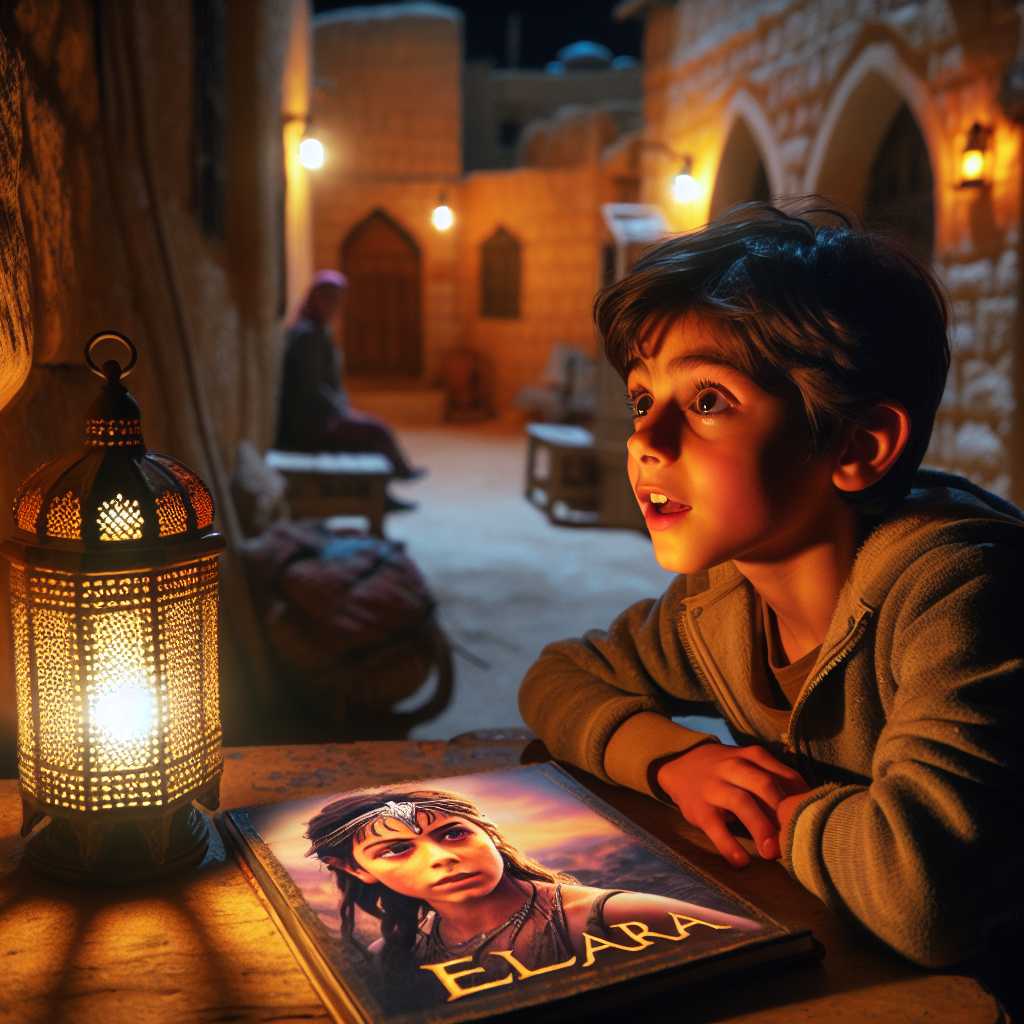
Each evening, as the sun dipped below the western hills, Elias would sit on the wooden bench outside his cottage, his gaze lost in the horizon. Children from the village would gather around him, eager to hear tales of yore from the elder who seemed to know the language of time itself. He would weave stories of brave knights and enchanting princesses, of battles heroically fought and loves tragically lost. Yet, none of his stories was more enchanting than “The Song of the Wind.”
“Once long ago,” Elias would begin, his voice low and resonant, “there was another village just like ours, sitting under the same canopy of stars. In this village lived a young woman named Aylin, whose voice was said to be a gift from the nightingale itself. Each note she sang hung like the ripest fruit, full of sweetness and longing, casting an enchanting spell over all who heard.”
“Aylin's voice,” Elias would continue, “could make the weariest hearts feel hopeful. Villagers spoke of journeys taken and perils braved just to hear her sing. Yet, for all the joy she brought to others, Aylin herself carried a sorrow that ran as deep as the darkest forest ravine.”
One evening, a stranger named Tariq wandered into the village. Tall and mysterious, he carried with him an ancient flute, its wood weathered and polished by countless years. Tariq was a minstrel, a traveler of paths untrodden by ordinary men. His music whispered to the mountains and spoke to the trees. When Aylin first heard Tariq play, it was as though the wind itself had found words.
As days turned to weeks, the notes of Tariq’s flute mingled with Aylin’s song, creating a melody that danced through the village like a gently winding river. The villagers gathered, entranced, while the twilit sky bore witness to this harmony of hearts. Slowly, a bond grew between the minstrel and the songstress, forged through shared notes and stolen glances.
“Why do you sing?” Tariq asked one moonlit night, his tone a soft caress against Aylin's solemnity.
“Because the wind calls to me,” she replied, her eyes reflecting the stars above. “It carries my song to my father, who resides in far-off lands. This is how he'll know I am well until he returns.”
Day by day, Tariq and Aylin painted the village air with the colors of their music, and day by day, Tariq fell deeper into Aylin’s music, a passionate longing pulsing fiercely within him. He yearned to stay by her side, yet at the heart of his music was the call of far-off places and distant shores.
Then came a day when the village awoke to a somber dawn. Tariq was to leave, pulled by the relentless tug of the wandering minstrel's call. With a heavy heart, Aylin stood by the edge of the village to bid him farewell. As the village held its breath, she sang with all her soul, her voice rising, arching, and falling like the flight of a bird in the crisp morning air.
Tariq hesitated, knowing this might be the last time he heard such beauty. He lifted his flute slowly, and for one last moment, their melodies entwined beneath the watching sky. Then, with a final bow, Tariq whispered, “May the wind carry my promise to return,” before he vanished into the horizon beyond the hills, leaving the echoes of his flute hanging in the air like soft whispers.
Seasons turned, and the village thrived, yet a shadow lay where once there had been joyful music shared between Aylin and Tariq. Evenings brought Aylin to the familiar spot where trees once danced to their melody, and there she sang, hoping that perhaps the wind would guide Tariq back.
As news of her enchanting voice spread far and wide, hopeful strangers journeyed to the village, yearning to hear the songstress who sang for the wind. Yet time, unyielding as it is to promises of return, withered the hope she clung to like a fading bloom.
Eventually, her songs grew softer, filled with a longing so profound that all who heard it could not remain untouched. The villagers, who were once spellbound by her joyous vibrancy, now spoke in hushed tones of her quiet solitude.
Then, one twilight, just as the first star stretched awake in the evening sky, Aylin sat alone, looking out upon the visitor-less road. With a sigh, she began to sing, her voice as light as the first snowfall yet as deep as the endless sea. The wind, her eternal companion, took her notes and carried them far till it seemed as if the very heavens themselves listened.
For the briefest moment, she thought she could hear the haunting timbre of a distant flute, and her heart leaped with wild, unbidden hope. But the melody vanished, leaving a hollow echo that resonated deep within her soul.
Thus it was that Aylin's life became a mournful dance between hope and resignation, her only solace the thought that perhaps one day the wind would bring Tariq back to her, carried by their melody of the heart.
Years passed and generations turned, yet in the village, the echoes of Aylin's longing song lingered, woven into the very fabric of the place. Some say if you listen closely on a silent night, you can still hear the whisper of the wind carrying the notes of a lost duet over the hills, reminding all that beauty often blooms from the root of sorrow.
The story of Aylin and Tariq, held tenderly in the memories of villagers, lived on as The Song of the Wind, a poignant reminder of love that, though separated by life’s winding paths, endures timelessly in the soul's deepest corners.
Thus, Elias, the elder, ended the tale, his eyes shimmering under the starlit sky. And as the children quietly left, cradling the story in their young hearts, the gentle murmur of the brook seemed almost to echo a distant melody, the song of the wind that none could see, yet all could feel.