Elias's Journey: Love's Echo in a Forgotten Village



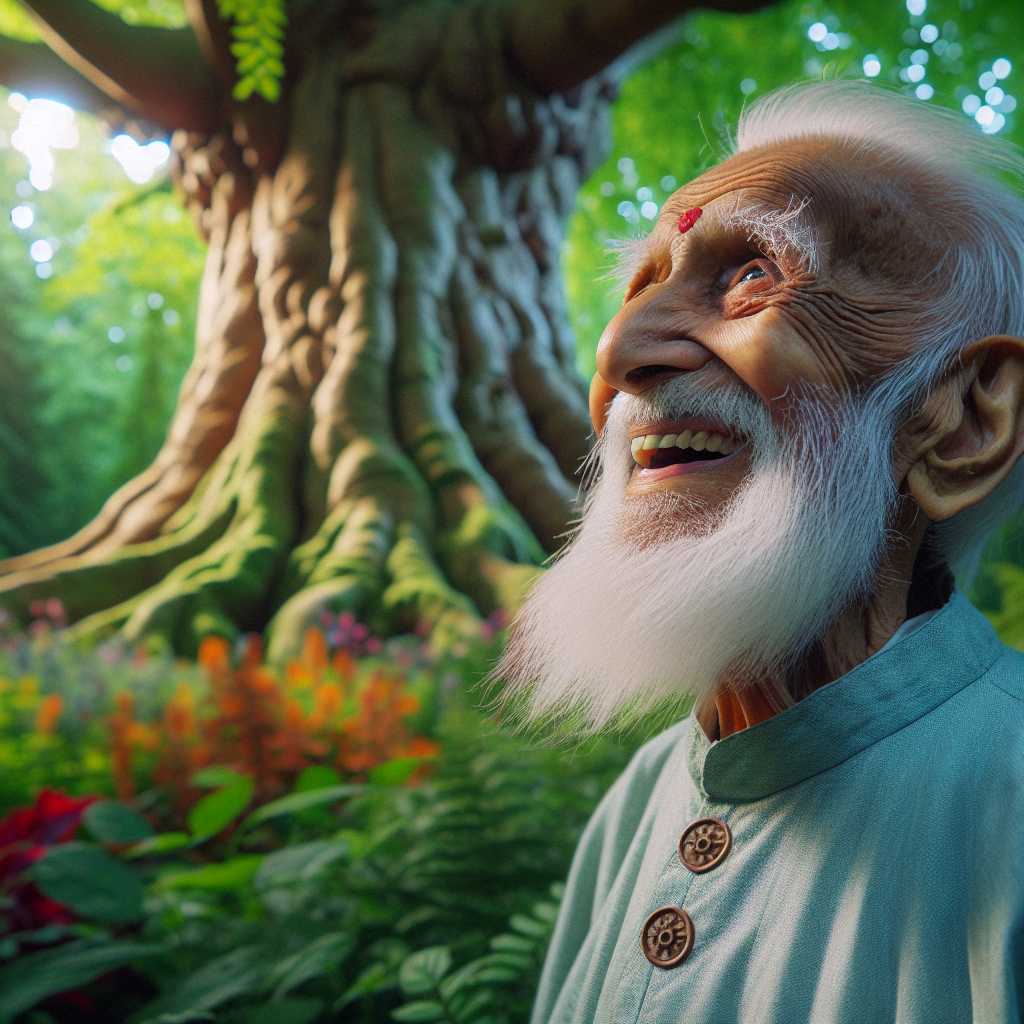
In a small, forgotten village nestled between rolling hills and dense forests, there lived an old man named Elias. His life had been woven with threads of hardship, but nothing could have prepared him for the quiet desolation that would envelop his final days.
Elias had once been a blacksmith, his hands strong and calloused from years of toil, forging tools for farmers and villagers alike. His hammer sang a timeless song on the anvil, a melody of strength and endurance. But life, with its unpredictable currents, had swept away the pillars of his world. The forge stood silent now, its embers cold, a testament to time's relentless march.
Beside him always had been his beloved wife, Amelia, a woman of grace and wisdom. Her laughter had filled their modest home with warmth, her presence the anchor for Elias's soul. Yet fate, as it often does, rendered a cruel hand. A harsh winter swept through the village, its icy fingers claiming her life, leaving Elias adrift in a sea of sorrow.
Elias, left alone, found solace in memories. His evenings were spent in the small wooden chair by the fireplace, the sepia-tinted photographs of Amelia his only company. He spoke to her still, his words gentle whispers in the shadows of an empty room. Each whispered conversation hung in the air, unanswered, but to Elias, she was listening.
"It feels like yesterday," he would murmur, tracing a finger over her face in the picture, "when we danced under the harvest moon. Do you remember, Amelia?"
He would close his eyes, and in the darkness behind his eyelids, she would be there. The golden curls of her hair catching the moonbeam’s glow, her eyes sparkling like the night’s brightest stars. In these moments, time held no dominion over memory.
The village too had changed, evolving like soil turned by the season's hand. Once thriving, it had slowly been deserted. The younger generation, eager for opportunity, sought vibrant futures beyond the horizon’s reach, leaving behind only echoes of their laughter. The cobblestone streets, overgrown with moss and decay, seemed to weave the tale of a forgotten past.
Elias's son, Caleb, the embodiment of vigor and youthful dreams, had left many years before. Though proud of his son’s ambition, each letter received was both a balm and a knife, reminding Elias of the empty chair at their dinner table. Caleb, caught in the relentless hourglass of city life, visited infrequently, his promises of return slipping away with the sands of time.
Then came that fateful spring, as shy wildflowers peeked through the thaw, the village was visited by a distant kinfolk. Sarah, a cousin's daughter, arrived with the purity and energy of youth. Her presence brought a breath of life to the village and to Elias's weary existence. Her laughter, a chiming bell, stirred dormant corners of his heart.
Sarah stayed with Elias, sharing the old house at the edge of the village. The days spent together rejuvenated the old man; in her, he saw glimpses of Amelia’s kindness and his own legacy. Together, they wandered through the forest, her questions about the flora and tales of village lore breaking the monotony.
But as the days grew longer, Sarah, true to her nature, felt the pull of a world waiting to be discovered. Her departure, though spoken of gently, left a cracking note in the melody of Elias's days. He encouraged her with a smile, hiding the shadow that crossed his worn features.
"Go, explore," he said, his voice steady despite the turmoil within, "and carry with you the stories of our little world."
Left once more amidst the stillness, Elias felt the weight of solitude pressing down, a specter at his side. The village elders often visited, sharing words of comfort, yet Elias remained trapped in a realm stitched from silence and memories.
As the seasons turned, the village succumbed further to time's embrace. Nature reclaimed structures once strong, ivy covering stone, the forest whispering secrets to the wind. Elias, with the last autumn leaves falling around him, took one final stroll down the beaten path to the village’s heart, his heart heavy yet resigned.
"I have lived," he whispered to the wind, "a life surrounded by love, and for that, I am grateful."
Back in his quiet abode, he settled into his favorite chair one evening, gazing into the flickering flames. A worn letter lay in his hands, the ink faded but the words ever present before his eyes. Caleb wrote of love, longed-for reunions, and promised visits. Elias knew that some promises remained unfulfilled, not for lack of love, but for life’s fickle nature.
The fire danced, casting playful shadows across the room. Elias closed his eyes, Amelia’s face resurfacing instantly. Her laughter echoed softly, intertwining with the crackling of wood. In his heart, a gentle warmth bloomed—an understanding that life’s journey, though solitary in its cadence, had been a tapestry colored by moments of profound love.
As the night extended its gentle embrace, Elias drifted into a slumber deeper than any before. In dreams, he wandered the fields of golden wheat under a harvest moon, Amelia by his side. They danced, free and timeless, amidst a choir of distant stars.
When morning light filtered into the room, the fire had long ceased its dance, and Elias sat still, at peace, the quiet house echoing with the unspoken 'farewell' of a soul reunited with its love.