The Legend of the Silent Harp: Eithne's Tale


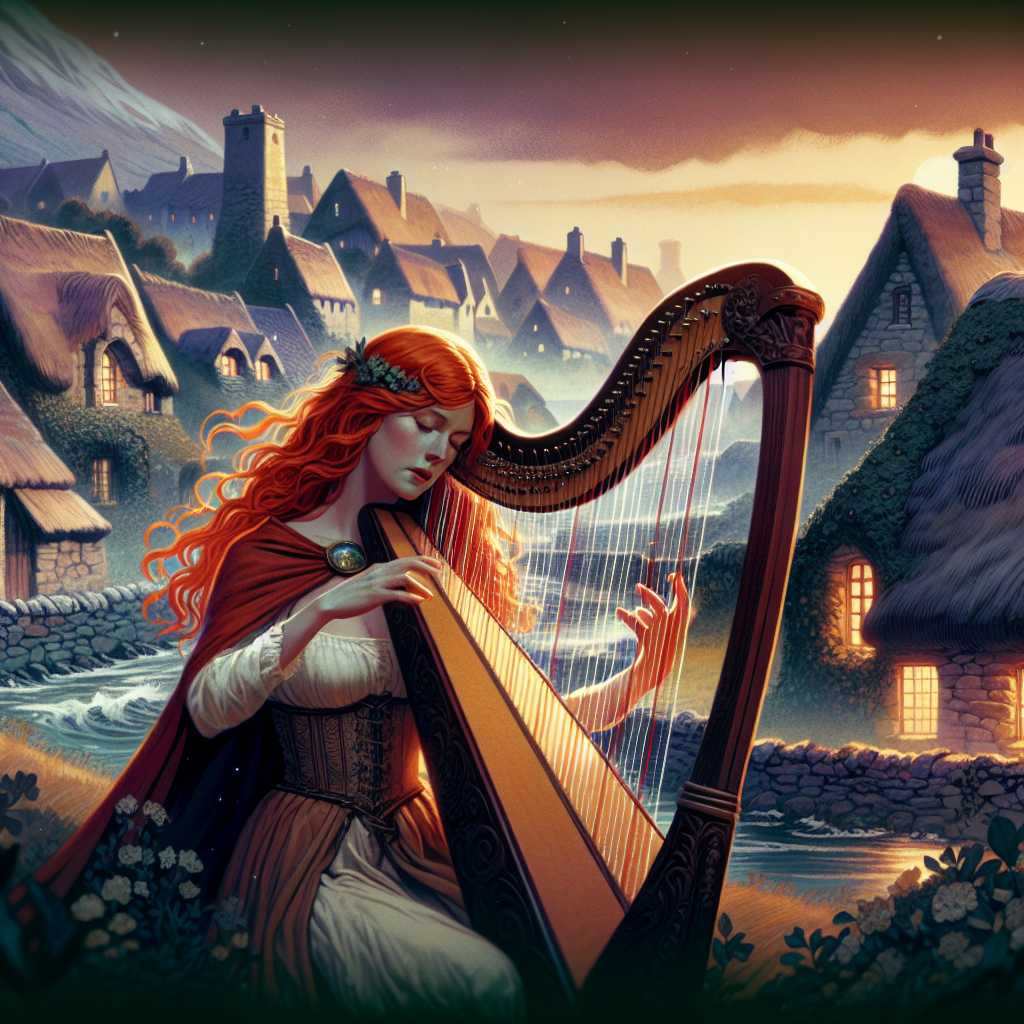
In the mist-laden hills of medieval Galway, there lies a forgotten village, nestled amidst the sprawling green valleys and echoing with whispers of a distant past. The villagers often spoke in hushed tones about the days when music reigned supreme, and a harp sang of freedom and bravery. This is the tale of the Silent Harp, a legend that the bards dare never forget.
It was the time of the high kings, when Ireland's emerald lands shimmered with ancient tales and magic ran as thick as the morning fog. The air was alive with the sound of clashing swords and the melody of soft harp strings, a dichotomy that defined the era. Near those emerald plains resided a noble family known as the House of O'Shea, renowned for their valor and loyalty to King Fergal, the rightful ruler of the western lands.
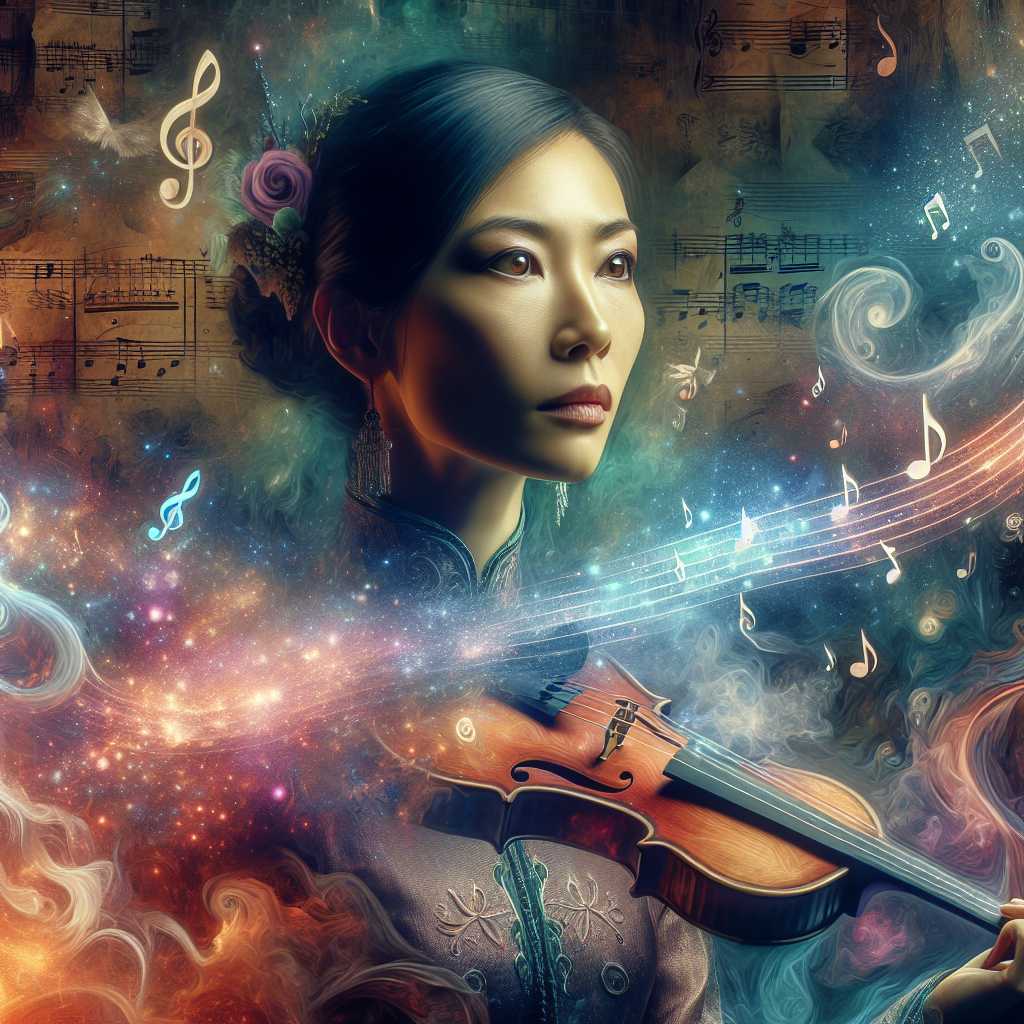
Among the O'Sheas was an extraordinary young woman named Eithne, blessed with ethereal beauty and eyes that spoke of wisdom far beyond her years. There was another gift she bore, one that set her apart from her kin and the rest: her unparalleled skill with a harp. It was said that her fingers danced over the strings with such grace that even the wind would pause to listen.
**Eithne’s harp was no ordinary instrument**. Fashioned from the finest oak and strings spun from the hair of enchanted horses, its sound was like silk whispering across crystal. Oftentimes, at dusk’s gentle embrace, she would settle by the hearth, and her music would flow across the village, binding hearts and soothing weary souls.
"Play us a song, Eithne," the villagers would ask, their eyes alight with anticipation and adoration.
One fateful day, a shadow descended upon the land. The conniving Norsemen, with their dragon-headed longships and insatiable greed, set their sights on Galway’s riches and lush pastures. It was a gloomy dawn when news reached the village that the invaders were storming the castle gates, leaving a path of ruin in their wake.
The very air was heavy with the scent of dread, and villagers huddled together, seeking solace in Eithne's harp. She played without pause, hoping her melodies might serve as a beacon of hope in that sea of despair.
Eithne’s brother, Cian, the bravest among the O'Shea warriors, girded himself for battle, knowing well the forces they faced outnumbered their own. In a quiet moment, he approached his sister, his eyes betraying a blend of pride and fear.
"Hold fast, dear sister," he whispered. "Let your music weave courage through our hearts until this darkness lifts."
**Eithne nodded** fiercely, her spirit unyielding, replying, "Godspeed to you, brother. May my song guide you home."
And so Eithne played, her melody rising into the heavens, a sacred prayer woven through the strings, almost as if imploring the ancient Celtic Gods to shield her people. Songs of victory twined with those of mournful longing, tales of old sacrifices, and future dreams entwined by a tune so poignant that time itself seemed to pause and listen.
As the sun reached its zenith, the skies above turned tumultuous, echoing the turmoil below. On a bitter field not far from the village, the clash between the Norsemen and the defenders painted a swift and brutal dance. The O'Shea warriors, led by courageous Cian, fought valiantly, their spirits buoyed by Eithne's song.
The battle raged till nightfall, and when the crimson sun dipped below the horizon, a deafening silence followed. Word trickled back slowly. Victorious but battered, Cian returned, his face masked in shadows, the weight of loss upon him. He carried grim news—many had fallen, including the beloved king, Fergal himself.
Grief hung thick in the air like a shroud. The village mourned for all that was lost. Yet amidst the ruin, they had won the day, their home saved from pillage and plunder. Eithne's harp had steered their hearts toward triumph.
But the sound of battle left the harp mute. Eithne, her heart heavy with sorrow, placed her hand upon the strings. Alas, the music had fled, and silence nestled where melody once dwelled. With anguished tears, she laid the silent harp upon the hearth, never to play again.
Stories of Eithne's harp persevered, carried forth by bards who told of the silent strings that saved a village and a dozen lives. They spoke of the music that lingered in souls, long after the harp had quieted. For though the instrument was silenced, its echo carried on in the hearts of those who remembered.
Time moved on, as it ever does. The turbulent tales slipped into the realm of legend, yet if you listen closely, hushed whispers speak of a harp that once sang to the hills, a melody that will forever waltz with the wind. The Silent Harp of Eithne, though never heard again, remains immortal in its silence—an eternal tribute to those who remained steadfast and unbroken.
And so, the legend lives on, echoing softly in the stories we cherish, reminding us of the harmony our history holds, even amidst life's greatest dissonance.