
The Mystery of the Stolen Stradivarius


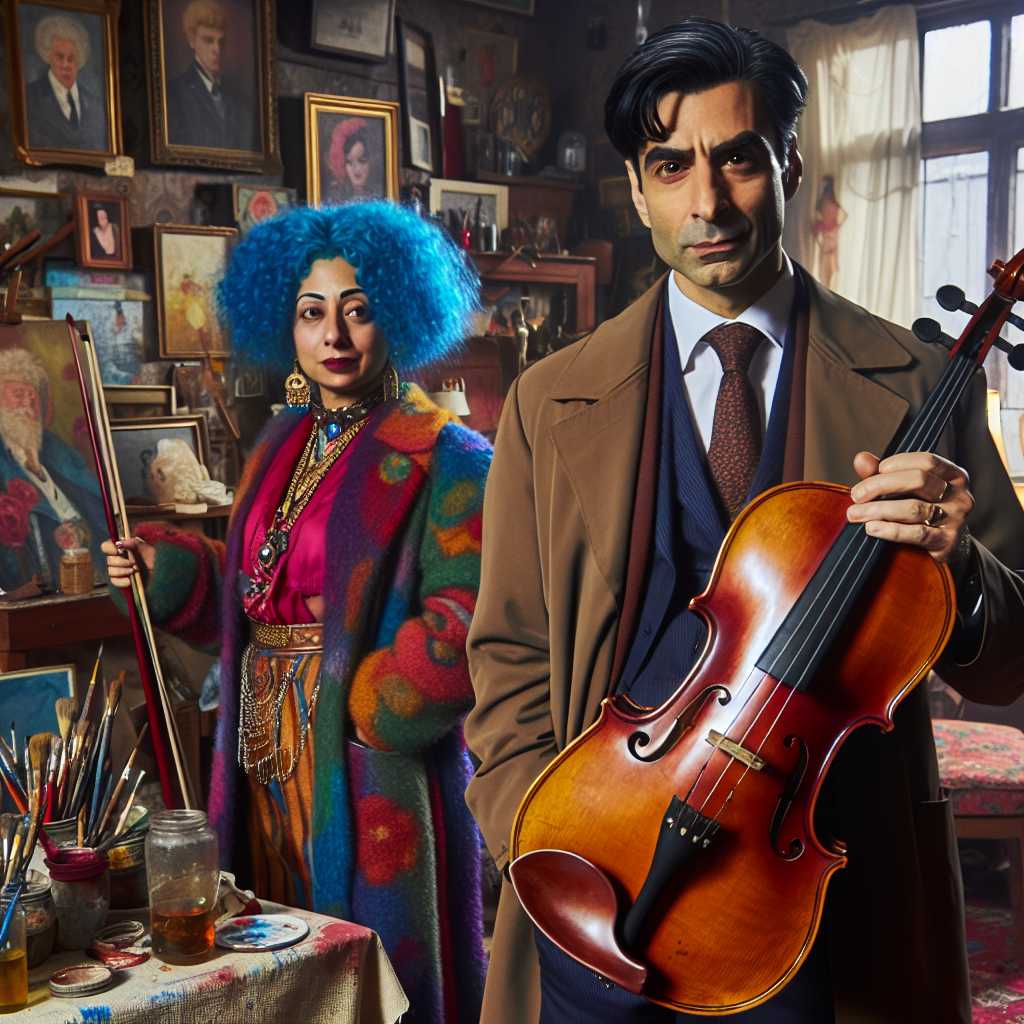
It was a crisp autumn morning when Detective Jonathan Harper strolled into his office on Baker Street, his coat damp from the persistent drizzle. The fog hung low, blanketing the city in an ethereal mist. He glanced at the clock—8:30 a.m.—and settled into his timeworn, leather chair, ready for another quiet day. Little did he know, this calm was about to be shattered.
His receptionist, Miss Edith Collins, knocked gently at the door and peeked inside. "Detective Harper," she said, her voice betraying concern, "there’s a gentleman here to see you. He insists it's urgent."
Harper motioned for her to let him in, curiosity piqued. Moments later, a tall, lanky man with disheveled hair and an air of desperation entered the room. He was clutching a violin case as if it were his lifeline.
"Good morning, Detective," the man began, his voice a mixture of urgency and despair. "My name is Felix Armstrong. I fear my prized Stradivarius has been stolen."
The detective raised an eyebrow. A missing Stradivarius, one of the most famous and valuable violins in the world? Now that was something to warrant his attention.
"Please, have a seat and tell me everything," Harper urged, pulling out a notepad.
Felix settled into the chair, visibly agitated. He opened the violin case on his lap, revealing nothing but a fistful of air.
"I perform with the London Philharmonic," Felix explained. "Last night, after our concert, I returned to my dressing room and found the case empty. There were no signs of forced entry."
"Who else had access to your dressing room?" Harper inquired, scribbling furiously.
"Only the members of the orchestra and the theatre staff. But they're all trusted colleagues," Felix replied, a hint of helplessness in his voice.
Harper put down his pen, leaned back in his chair, and contemplated. A missing violin of this value must involve someone who knew its worth, someone with a keen eye and a deft hand.
"I'll need a list of everyone backstage last night," he instructed. Felix handed him a roughly scribbled note with names, a jumble of musicians, and theatre crew.
The detective spent the next few hours paying visits to the addresses on the list. He began with the conductor, a burly man named Charles Wellington, who was more interested in his new symphonic arrangement than the missing instrument.
"Terribly unfortunate," Charles muttered while marking sheets of music. "But I’ve seen Felix's temper and misplace things often. Could be misplaced rather than stolen.”
Next was the stage manager, a no-nonsense woman named Eliza Mclean. She was skeptical of foul play in her meticulously organized backstage.
"You know how musicians are," Eliza quipped, running fingers through her curly red hair. "All passion and little foresight."
Each interview revealed more about the tightly-knit theatre community: rivalries, friendships, and past grievances, but no prominent suspects. Harper filed them away in the archive of his mind as he made his way through the cobblestone streets, pondering his next move.
The breakthrough came when Harper stopped for a much-needed cup of tea at a nearby café and overheard two musicians gossiping about a painter, Hugo Vance, who had been working at the theatre. "He was designing the new stage backdrop," they whispered, "and always hanging around the dressing rooms, admiring the old violins."
Harper’s intuition buzzed. He immediately sought out Hugo’s address, and a short cab ride later, he found himself in the artist's dimly lit studio.
Scattered canvases juxtaposed with the sweet strains of violin music drifting from a gramophone. The paintings were vibrant depictions of the very stages of the theatre, with a distinct focus on musical instruments.
Hugo, an eccentric character with paint-speckled clothing, greeted Harper warily. His eyes flitted to a closed cupboard at the mention of Felix’s name.
"You’ve been quite interested in violins lately," Harper observed nonchalantly.
"An artist's inspiration comes in many forms," Hugo responded evasively, avoiding eye contact.
Harper approached the cupboard, feeling the tingling sensation of a secret softly begging to be uncovered. He opened it to reveal a collection of paints, brushes and, unmistakably, a violin case—one that could perfectly house a Stradivarius.
Hugo’s face went pale as parchment, "I... I only meant to borrow it,” he stammered, artifice failing. “I wanted to capture its essence in my paintings, just for a short while.”
"You do realize the value, both monetarily and sentimentally, you’re dealing with?" Harper admonished, seizing the case.
Reluctantly, with the expression of a child caught painting the walls, Hugo surrendered. As he left the studio, the melody of a violin continued to play, sorrowful and sweet.
Returning to Felix's flat, Harper presented the recovered Stradivarius with a flourish. Felix was overcome, cradling the instrument as a lost love found.
"I can’t thank you enough," Felix exclaimed, teary-eyed, "I should have known better than to let it out of my sight."
"Just remember," Harper smiled warmly, "even the most perfect melody can go awry if handled with carelessness."
And with that, Detective Jonathan Harper left into the evening fog, the music of his soul harmonized by the restoration of a cherished violin and the subtle complexities of human folly.