The Enigma of Eldridge's Phantom


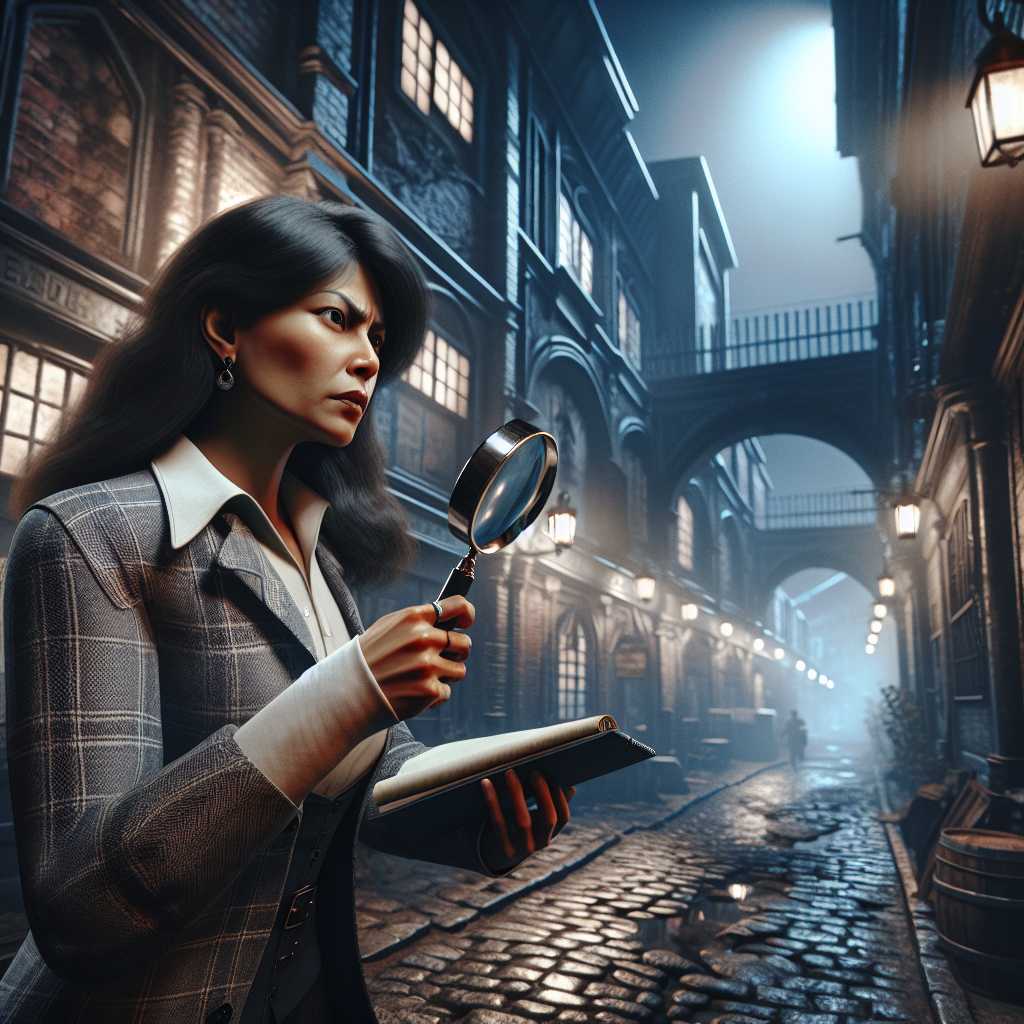
In the heart of the bustling city of Eldridge, where the neon lights painted the night sky and the hum of life never ceased, there lurked an enigma that none could unravel. It was here, amidst the shadows that pooled in dark alleys, that a series of unsolved crimes haunted the alleyways, whispering tales of fear and intrigue.
The local precinct had grown restless as reports poured in, each an echo of the last—a shadowy figure who struck with precision and vanished as if nothing more than a specter. Despite their best efforts, the mysterious criminal known as "The Phantom" left no trace, no fingerprints, no sign of their presence other than the cold dread that followed in their wake.
"It was like staring into the abyss," recounted Detective Laura Marlowe, the sharp-minded officer tasked with unraveling this confounding puzzle. A seasoned investigator with an unyielding spirit, Marlowe was both revered and feared for her relentless pursuit of justice. Her dark eyes could penetrate the toughest of lies, and her instincts were as sharp as a wolf’s in the wild.
Boldly, she immersed herself in the shadowy underworld of Eldridge, determined to bring light to the darkness. Her investigation led her through the labyrinth of the city, from the top floors of glass-covered skyscrapers to the deepest, dustiest archives of the forgotten.
One late autumn evening, as the wind howled and leaves danced painfully down the deserted streets, Marlowe found herself standing before the ancient façade of the Ellington Theater. The theater, once the crown jewel of Eldridge’s artistic flair, had fallen into disrepair, its echoes of laughter and applause drowned out by the city's uncaring din.
It was here that the Phantom had struck last—a masterpiece stolen, a curator threatened, and a searing note left behind: "Catch me if you can."
"The Phantom thrives on the thrill and the chase," Marlowe mused, her breath fogging in the cold air, "and like any performer, they seek an audience for their grand act."
As she crossed the threshold into the theater, a realm of shadows unfolded before her. The moonlight filtered through broken windows, casting ghostly patterns on the dust-covered seats. Her flashlight beam cut through the thick shadows, revealing cobwebs and forgotten memories.
Yet, beneath the decay, there was something else—a hint of recent activity. On the main stage, props had been rearranged deliberately into a curious formation. The all-seeing mask of tragedy faced the heavens, while comedy lay buried beneath a sea of forgotten programs.
Marlowe's keen eyes took in every detail. The Phantom's real stage was beyond the deceit—beyond the props lay peeled back curtains revealing truths hidden in plain sight. But Marlowe knew the performance wasn’t over; the final act was yet to begin.
Days turned into nights, sleepless and filled with the ceaseless search for clues. The Phantom was meticulous, each crime more audacious than the last. Montages of images, collected evidence, and red strings began to weave a tapestry of deduction on her office wall. Yet, like a puzzle with missing pieces, something always seemed just beyond her grasp.
Then, an almost imperceptible clue emerged—a thread that connected the Phantom’s enigmatic appearances to a forgotten past—a series of abandoned tunnels beneath Eldridge once rumored to smuggle goods and whispers of rebellion. It was here Marlowe sensed the Phantom's true lair might reside.
Fatefully, she descended into the catacombs of history and shadow, lantern in hand. Each footfall reverberated through the narrow stone corridors, the air thick with centuries of dust and secrets. And there, amongst relics of the past, she discovered evidence—discarded clothing, old theater tickets, and a faded map marking the city's underbelly.
Realization dawned upon her like the first rays of sunrise over a dormant city—the Phantom was not merely an elusive criminal but a person trapped between two worlds: the history they venerated and the future they feared. Driven by an endless dance of identity, they sought freedom through chaos.
Marlowe's mind raced as the pieces finally clicked into place. In the echoes of silence, she heard the rush of footsteps—swift and confident. The Phantom stepped from the shadows, their mask concealing everything yet revealing the craft with each subtle movement.
"Are you here for the chase, Detective,"
the Phantom intoned silkily, clad in garments woven with time. "Or to find an ending?"
Marlowe, unflinching, replied, "Not an ending, but a beginning. The theater need not be a place of ghosts."
In a final crescendo, the chase erupted, both figures weaving through darkened halls as the play reached its climax. Outside, the city waited under starlit vigil, unaware of the cathartic dance unfolding beneath its paved arteries.
And there, within the endless labyrinth of Eldridge’s forgotten veins, the Detective found what she sought—not just the Phantom, but the soul behind the mask. Her words pulled at strings pulled taut by desperation, until the mask fell and truth illuminated the hidden folds of shadow.
The city above breathed, none the wiser save for the watchful few. And Detective Marlowe—she walked beneath the dawning light, the specter of her triumph shrouded in humility, a tale written not in headlines, but etched within the silent annals of justice, forever lingering in the soft echoes of the theater that once was.