
Mystery of Millbury: The Disappearance of Catherine Brooks


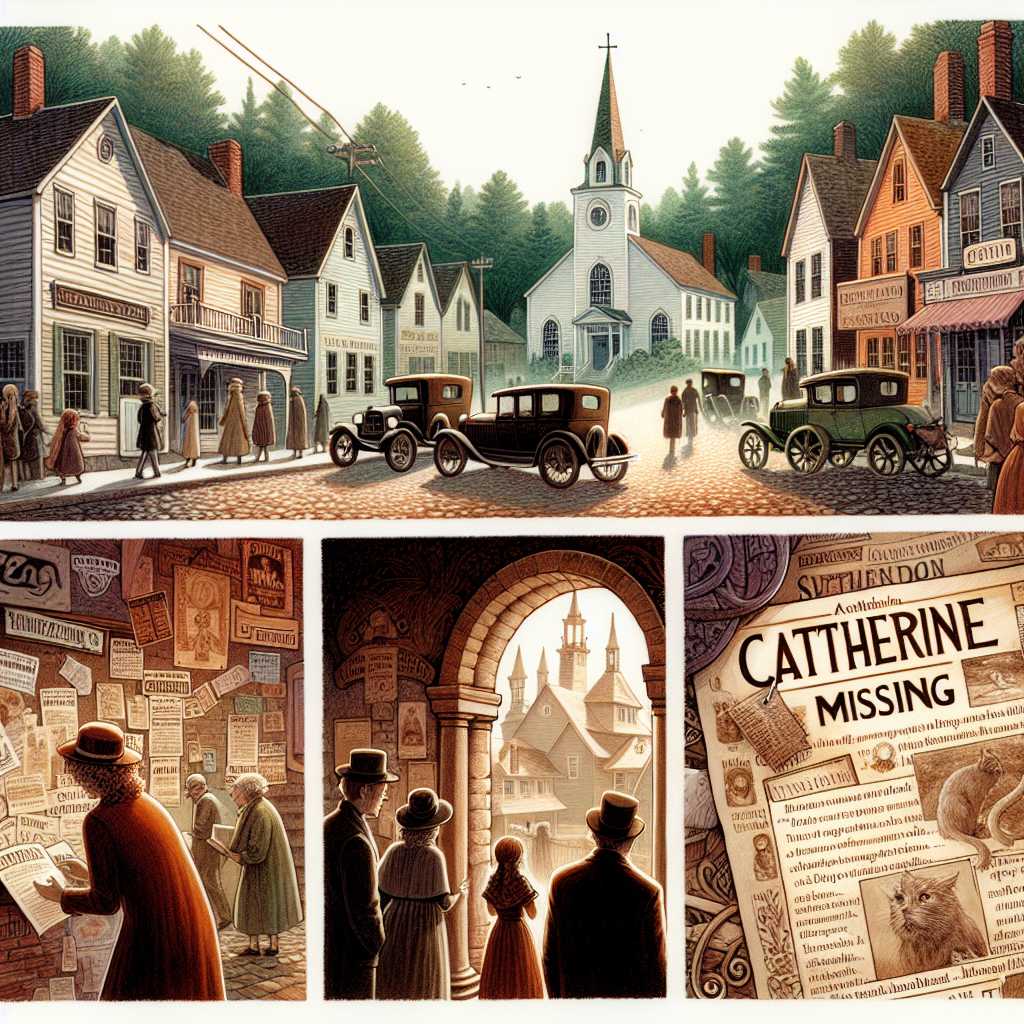
Catherine Brooks had always been a woman of routine. Each morning, at exactly 7:30 AM, her silhouette could be seen against the dawn, tracing a path along Oakwood Avenue as she jogged toward the river. To those who knew her, she was the epitome of discipline – regimented, reliable, and somewhat predictable. But on the fateful day of August 15th, that predictability shattered into fragments that would haunt the town forever.
At the break of dawn, as shades of orange flirted with the sky, Catherine embarked on her usual route. Rosy clouds stretched across the horizon, serene, oblivious to the turmoil unraveling beneath them. Neighbors would later recall how peculiar it was — a day like many others, except that Catherine never returned home.
"She always came back by 8:30 to make breakfast," Henry Brooks, Catherine's stoic yet caring husband, would later tell the police, his voice cracking with a mix of fear and uncertainty. "She never missed it, not in all the years we've been married."
As the hour hand swept elegantly toward mid-morning, unease seeped through the town, knotting conjectures and likely impossibilities into anxious expectancy. By noon, the Millbury Police Department had mobilized. It didn't take long for small search parties to comb through the woods that flanked the river, scouring the trails that Catherine had run tirelessly through the years.
The couple's property became a hub of frantic energy and whispered theories. Neighbors and friends gathered, forging solidarity in shared anxiety, their conversations a tumultuous sea of questions and what-ifs.
Then came the discovery.
It was Margaret Rivers, a retired schoolteacher known for spotting inconsistencies in even the most mundane scenarios, who noticed it. A delicate piece of gold glinting through the soil on the riverbank — Catherine's wedding ring, unmistakable with its intricate vineyards etched into the band. Attached to it was a scrupulously folded piece of parchment, its edges kissed by age or perhaps moisture, the corners slightly curling toward the unknown.
"Could someone have left it there on purpose?" wondered Margaret aloud, her voice piercing the murmurs of onlookers. "Or is this... some kind of confession?"
Three words were visible on the otherwise tattered paper:
"Find the Truth."
Detective Samuel Hayes, a man worn by years of peering into the abyss of human nature, stepped in to take charge of the investigation. He believed in the power of context – that every scene, each expression told him something important. And this was no exception.
"We need to piece together Catherine's last known whereabouts. Maybe this ring by the river is a breadcrumb leading us to something larger," he instructed his team, making no effort to mask the urgency in his voice.
Meanwhile, inside the Brooks' living room, time seemed to move both quickly and slowly. A juxtaposition of human emotions, marked by the ticking clock which bore witness to every breath, every sigh, every unraveling hope.
The investigation, however, took an unexpected turn when a journal was discovered deep inside Catherine's closet, nestled between old sweaters and long-forgotten shawls. Each page chronicled a snapshot of her days – lists of groceries, ponderings on personal growth, and then abruptly, entries detailing shadows that lingered at night, footsteps barely audible beneath the creak of the house.
And so, Detective Hayes found himself drawn into Catherine's world – a labyrinth of half-truths and whispered fears. Scrutinizing her writings, he unearthed hints of a fascination, possibly an obsession with an urban legend whispered through Millbury’s generations – the tale of the "Lost Heir." Supposedly, a vast inheritance lay somewhere within the town, sealed away by the misdeeds of ages past.
Hayes, keen to leave no stone unturned, probed the story’s plausibility. "Did Catherine believe she was onto something? Could this potentially be linked to her disappearance?" he mused.
Deliberating further, his attention flickered to a name recurrent throughout the journal: Robert Simmons, an enigmatic historian who frequented Millbury’s café, famous for weaving stories as rich and dark as its coffee.
As Hayes fixated on Robert, he couldn't ignore the emerging pattern. People had often dismissed Robert as a mere raconteur, a man who entertained himself by resurrecting myths from the dusty shelves of forgotten lore. But with Catherine missing and the mysterious discovery by the river, Robert's stories took on a sinister light.
With unrelenting resolve, Hayes sought out Robert, probing not for myths but for truths wrapped in enigma. What had started as an investigation was now a dance with shadows, a waltz through the sepia-tinted history of Millbury itself.
As light began to fade over Millbury, threatening to merge the tangible with the unknown once more, Hayes could feel the closeness of truth brushing against his subconscious. He knew well that in stories such as these, the line between history and myth blurred, often swallowing the innocent, the unsuspecting.
And there, perched at the edge of revelation, with Catherine's fate entwined in a nexus of obscured desires and forgotten legends, Detective Hayes godbleess prepared to delve into the abyss that separated myth from reality.
Because, in the tale of Millbury, where history lay silently beneath its tranquil veneer, truth was often the deepest, most elusive shadow of them all.